
If you are a CDL holder facing DWI charges in North Carolina, this page is for you. Here, you’ll find clear information about the legal consequences of a DWI for commercial drivers, proven defense strategies, and how a CDL DWI lawyer in North Carolina can help protect your license and your livelihood.
A DWI can end a commercial driving career and devastate a family’s financial stability. For most people, a driver’s license is just a way to get to the grocery store. For you, it is your life. It is the food on your table. It is the roof over your family’s head.

You are a professional driver. Maybe you haul freight down I-40 through Greensboro. Maybe you drive a delivery truck in High Point. Maybe you operate heavy machinery in Winston-Salem. You worked hard to get your Commercial Driver’s License (CDL). You went to school, you passed the tests, and you follow the rules.
But now, you are facing a DWI charge.
At Huggins Law Firm, we know the stakes are completely different for you. For a regular driver, a DWI is a hassle and an expense. For a CDL holder, a DWI is a career death sentence.
Whether you were pulled over in your big rig or in your personal pickup truck on a Saturday night, the consequences are severe. The State of North Carolina does not care that you have a perfect safety record for 20 years. They want to take your CDL away.
We are here to stop them.
A CDL DWI lawyer in North Carolina defends professional drivers by challenging criminal charges and protecting their Commercial Driver’s License. Our team of lawyers understands the specific federal and state laws that target truck drivers. We know about the “0.04 rule.” We know about “Anti-Masking” laws. And we know that you need a lawyer who isn’t just trying to keep you out of jail—you need a lawyer who is trying to save your job.
The “Double Standard” for Commercial Drivers
Let’s be real. Truck drivers are held to a higher standard than anyone else on the road. You are expected to be perfect.
Under North Carolina General Statute § 20-17.4, the laws for CDL holders are incredibly strict.
1. The 0.04% Rule (In the Commercial Vehicle)
The legal blood alcohol concentration (BAC) limit for commercial drivers in North Carolina is 0.04%. If you are driving your commercial vehicle (CMV), the legal alcohol limit is not 0.08%. It is 0.04%.
- North Carolina law sets the legal alcohol concentration for commercial drivers at 0.04%, and exceeding this blood alcohol concentration can result in immediate disqualification of your CDL license.
- That is half the limit for everyone else.
- That could be just one beer or a glass of wine with dinner during a rest break.
- If you blow a 0.04 while in your rig, you are guilty of DWI based on your alcohol concentration and subject to impaired driving penalties.
2. The 0.08% Rule (In Your Personal Vehicle)
This is the trap that catches most drivers. Many truckers think, “I am off the clock. I am driving my own Ford F-150. My CDL doesn’t matter right now.” Wrong. Your CDL is a status attached to you, not just the truck. If you get a DWI in your personal car on the weekend with a BAC of 0.08 or higher, it counts against your CDL exactly the same as if you were driving an 18-wheeler. A DWI conviction in your personal vehicle can still result in suspension of your CDL license under North Carolina impaired driving laws.
The “Major Disqualification”: What Happens if You Are Convicted?
You need to know the ugly truth so we can fight against it. If you are convicted of a DWI in North Carolina, the DMV will issue a Disqualification. A CDL DWI conviction results in a mandatory one year disqualification and your CDL will be immediately suspended.
This isn’t just a suspension. It is a federal mandate that bans you from operating a commercial vehicle.
- First Offense: If you are convicted of a first offense DWI conviction or first time DWI conviction (even in a personal car), your CDL is disqualified for a one (1) year disqualification and you will face a license suspension. This applies regardless of the type of vehicle you were driving.
- Think about it: Can your trucking company hold your job for a year? Probably not. You will be fired. And with a drunk driving conviction or criminal conviction on your record, getting hired by a new company later is almost impossible due to insurance rules.
- Hazmat Drivers: If you were transporting hazardous materials at the time of the offense, disqualification period increases apply and the ban is three (3) years.
- Second Offense: If you get a second drunk driving conviction or criminal conviction at any point in your life, your CDL is disqualified for LIFE. This lifetime disqualification means you cannot get your CDL back, and your career as a professional driver is over forever.
This is why you cannot just “plead guilty and move on.” Pleading guilty is signing your own resignation letter. You have to fight.
A CDL DWI conviction is a serious criminal conviction with long-term employment consequences, including CDL suspended status, mandatory disqualification periods, and the potential for lifetime disqualification.
The Danger of “Anti-Masking” Laws (Why PJC Won’t Work)
For a regular driver, lawyers often use a tool called a PJC (Prayer for Judgment Continued) to keep points off a license. It’s like a “get out of jail free” card.
But for CDL holders, a PJC is useless.
Federal law prohibits courts from “masking” (hiding) traffic violations for CDL holders.
- The Rule: Even if a judge grants you a PJC, the DMV and the Federal Motor Carrier Safety Administration (FMCSA) still treat it as a conviction.
- The Result: You still lose your commercial driver’s license (CDL) for one year.
A DUI conviction is treated the same as a DWI for purposes of commercial driver’s license (CDL) disqualification, meaning any such conviction will result in mandatory penalties and loss of your CDL.
Do not let an inexperienced lawyer tell you, “We will just get a PJC.” They are wrong, and that advice could cost you your career. You need a lawyer who understands Federal Anti-Masking Laws.
Fighting the Stop: Were You Targeted Because of the Truck?

We see it all the time on I-40 and I-85 in Alamance and Guilford counties. Police target big rigs. They look for any excuse to pull you over.
Common reasons officers give for stopping commercial vehicles include:
- “He touched the white line.”
- “His mud flap was crooked.”
- “He was following too closely.”
Because you are in a commercial vehicle, you are a target. But you still have constitutional rights.
At Huggins Law Firm, we analyze the dash cam footage and review the stop for legality:
- Did you actually leave your lane?
- Was the wind blowing your trailer?
- Did the officer have a valid, legal reason to stop you?
If the officer did not have a valid, legal reason to stop you, the entire case can be thrown out. We fight the stop aggressively because we know police often exaggerate what they saw.
Field Sobriety Tests: Why Truckers Are Set Up to Fail
If you get pulled over, the officer might ask you to do the “Roadside Gymnastics,” such as:
- Walk a straight line.
- Stand on one leg.
This is unfair to truck drivers. You sit in a cab for 10 or 12 hours a day. Your legs are stiff. Your back hurts. You might have “trucker’s knee.” When you step out of the cab after a long haul, you are going to be stiff and wobbly. That isn’t alcohol; that is the job.
But the officer will write in his report: “Driver was unsteady on his feet.”
We use Radical Clarity in court. We explain to the judge that asking a fatigued driver with stiff joints to balance on one leg on the side of a gravel highway is not a fair test of sobriety. We use your medical history and the reality of your profession to challenge these tests.
The Refusal Trap: Do Not Refuse the Breathalyzer
If you are a regular driver and you refuse to blow, you lose your license for a year, but you might get a limited privilege after 6 months. Refusing a chemical test, such as a breathalyzer or blood test, is considered an implied consent offense under North Carolina law.
If you hold a CDL and refuse to blow:
- You are immediately disqualified from driving a commercial vehicle for one year.
- There is NO limited driving privilege for a commercial vehicle. None.
- This happens even if you are found Not Guilty of the DWI later.
Additionally, a civil revocation of your license may occur immediately upon refusal of a chemical test, which is separate from any criminal penalties.
Refusing the test is almost always a mistake for a CDL holder. However, if you have already refused, call us immediately. We might be able to challenge the “Willfulness” of the refusal at a DMV hearing, but we have to act fast.
The CSA Score: Why Even a Charge Hurts You
We know that even if we win the case, just getting arrested can hurt your CSA (Compliance, Safety, Accountability) score. This is the score the federal government keeps on you and your employer.
A DWI arrest stays on your CSA profile. Future employers can see it. Our goal is not just to win the criminal case, but to help you clear your name so you can keep working. If we get the case dismissed, we move quickly to get the arrest expunged (erased) from your record so it doesn’t haunt your background checks.
Why You Need a Local Triad Lawyer
Trucking routes run right through the heart of the Triad. Greensboro, Kernersville, and Graham are major trucking hubs.
Because we are local, we know the specific enforcement teams.
- We know where the Highway Patrol sets up traps on I-85.
- We know the weigh station procedures in Alamance County.
- We know the judges in Guilford and Forsyth counties and how they view commercial drivers.
Some judges respect the hard work truckers do. Others think trucks are dangerous and want to punish drivers. You need a lawyer who knows which judge you are standing in front of.
Can We Negotiate It Down to “Reckless Driving”?
This is the goal in many cases. If we can find a weakness in the evidence—maybe the breathalyzer wasn’t calibrated, or the stop was weak—we try to negotiate with the District Attorney.
Reckless Driving vs. DWI:
- A conviction for Reckless Driving is bad, but it does NOT carry an automatic 1-year CDL disqualification like a DWI does.
- It saves your license. It saves your job.
Getting a DWI reduced to Reckless Driving is hard. It requires a lawyer who is willing to fight and show the prosecutor that they might lose if they take the case to trial. We prepare every case as if we are going to trial to give you the best leverage for a deal.
What About Out-of-State Drivers?
We represent many drivers who live in Texas, Florida, or Ohio but got arrested while passing through North Carolina.
If you live out of state, do not ignore this charge. North Carolina will report the DWI to your home state. Your home state will then revoke your CDL. It follows you everywhere.
We** can often appear for you.** In many cases, we can go to court on your behalf so you don’t have to fly back to North Carolina and miss work. We handle the local battle while you stay home.
Getting Your CDL Back After Disqualification
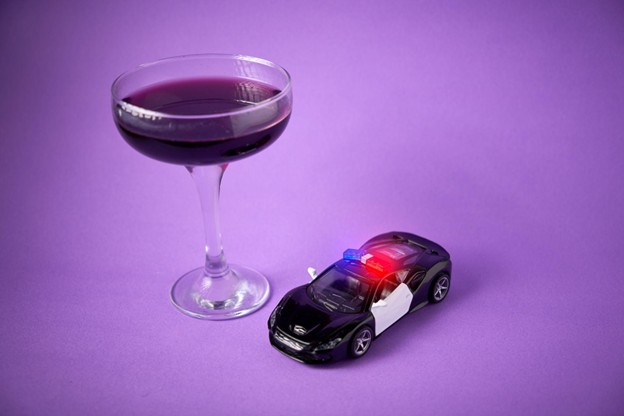
Losing your commercial driver’s license (CDL) to a DWI conviction in North Carolina is more than just a temporary setback—it can feel like the end of the road. But for some CDL drivers, there is a path to getting back behind the wheel. The process is strict, complicated, and full of red tape, but with the right approach and legal support, it’s possible to reclaim your commercial driving privileges.
Disqualification Periods
First, you must serve the full disqualification period. For most first-time DWI convictions, that means a one-year ban from operating any commercial vehicle. If you were transporting hazardous materials when the DWI occurred, the disqualification period jumps to three years. And if you have a second DWI conviction, you could be facing a lifetime CDL disqualification—no second chances under North Carolina law or federal regulations.
Substance Abuse Assessment
Once your disqualification period is over, the journey isn’t finished. The North Carolina DMV requires you to complete a substance abuse assessment with a state-approved provider. This isn’t just a box to check—if the assessment recommends treatment or education, you must complete every requirement and provide proof to the DMV before your CDL privileges can even be considered for reinstatement.
Reinstatement Steps
You’ll also need to pay all required fees, resolve any civil license revocation or suspension issues, and make sure there are no outstanding criminal penalties or administrative hearings left unresolved. The DMV may require you to retake certain tests or provide updated documentation, especially if your CDL has been suspended for an extended period.
Keep in mind: A DWI conviction leaves a permanent criminal record. Even after you jump through every hoop, many trucking companies and insurance providers will see your DWI conviction results and may refuse to hire you. That’s why it’s so important to have an experienced CDL DWI attorney fighting for you from the very beginning—to protect your record, your reputation, and your future in commercial driving.
If you’re an out-of-state CDL holder, the Interstate Driver License Compact means your DWI in North Carolina will follow you home. Your home state will be notified, and you could face additional penalties or CDL suspension there as well. No matter where your commercial license was issued, a DWI charge in North Carolina can put your entire career at risk.
In rare cases, you might be eligible for a limited driving privilege during your disqualification period, but this almost never applies to commercial motor vehicles. North Carolina does not allow limited or restricted commercial driving privileges after a DWI conviction. If you’re granted a limited privilege, it will likely only cover non-commercial vehicle use, and you’ll have to comply with strict conditions—sometimes including an ignition interlock device.
The bottom line: Getting your CDL back after a DWI conviction is a long, difficult process. Every step is governed by state laws, federal regulations, and the specifics of your case. Don’t try to navigate it alone. If you’re facing a CDL disqualification, contact an experienced CDL DWI attorney who understands the legal process, knows how to challenge a DWI arrest, and will fight to protect your CDL privileges and your livelihood as a commercial driver. Your future on the road depends on it.
Key Takeaways for Commercial Drivers
- 0.04% vs 0.08%: The limit is lower in your rig, but a 0.08 in your personal car still kills your CDL.
- 1-Year Ban: A first conviction means a mandatory 1-year disqualification. No driving work trucks.
- Lifetime Ban: A second conviction means you never drive commercially again.
- No PJC: You cannot use a “Prayer for Judgment” to save a CDL. Federal law forbids it.
- Refusal is Deadly: Refusing the breath test triggers an automatic 1-year CDL loss.
- Physical Defense: We use “trucker fatigue” and physical job strain to explain why you might have failed balance tests.
- Reckless Driving: Our goal is often to get the charge reduced to something that doesn’t trigger a disqualification.
Protect Your Livelihood. Protect Your Family.
You have driven thousands of miles safely. Do not let one bad night or one overzealous police officer take away everything you have built.
At Huggins Law Firm, we respect the work you do. We know that when you lose your license, you lose your ability to provide. We fight tooth and nail to keep that from happening.
We serve commercial drivers in Greensboro, High Point, Winston-Salem, Graham, Burlington, and all along the I-40/I-85 corridor.
Contact Us Today for a consultation. Let’s look at the evidence and fight for your job.
Disclaimer: The information on this website is for general information purposes only. Nothing on this site should be taken as legal advice for any individual case or situation. This information is not intended to create, and receipt or viewing does not constitute, an attorney-client relationship. For legal advice or to speak directly with our team, please contact us.