
Key Takeaways
- A Second Chance: North Carolina’s “Raise the Age” law finally allows most 16 and 17-year-olds to be treated as kids, not adults, in the court system.
- Not for Serious Crimes: Because of a brand new rule in 2024, teens who commit major felonies (Class A through E) are now automatically sent to adult criminal court.
- A Very Busy System: In Greensboro and Guilford County, hundreds of teens get in trouble every year. The most common crimes are breaking into cars, simple assault, and stealing.
- Juvenile Court is Different: The juvenile system wants to fix the problem, not just punish. But a bad result can still hurt your child’s chance to get into a good college.
- We Are Your Champion: At Huggins Law Firm, P.C., we know how scary it is when your child is arrested. We fight to keep your teen in the juvenile system and keep their record clean.
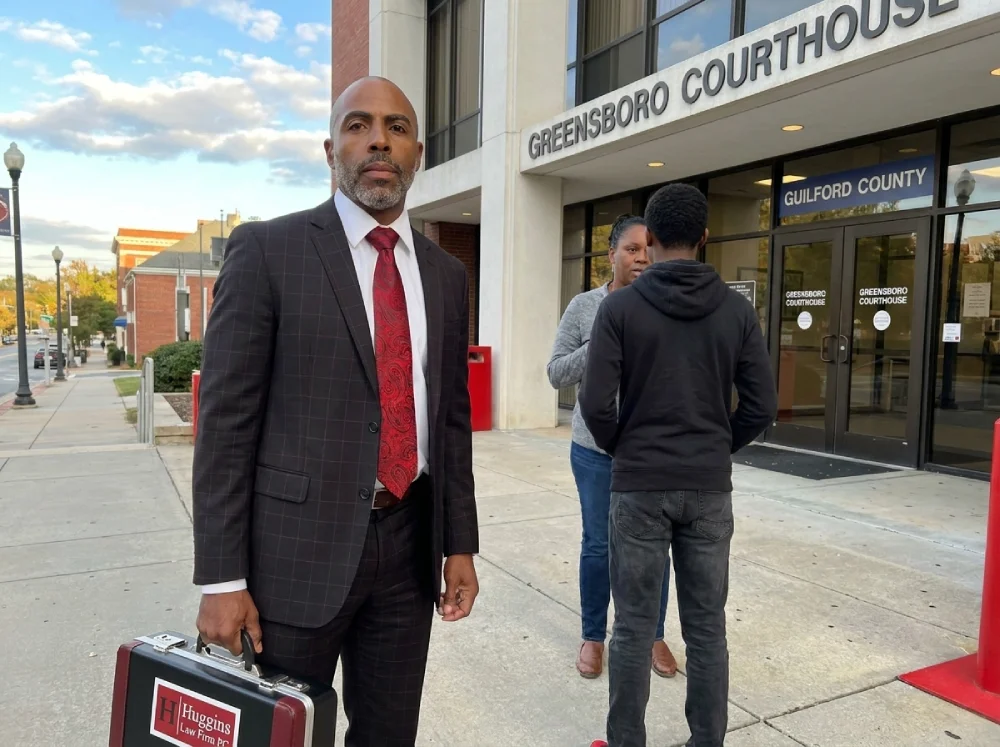
Hi. My name is Attorney Micah Huggins. I am the founder of Huggins Law Firm, P.C.. We have been helping families in our community for over ten years. We are highly rated, and we have won many awards. But awards are not what matters to me. What matters is protecting your child’s future. We proudly defend folks in Greensboro, Graham, Burlington, Asheboro, High Point, Kernersville, and Winston-Salem.
Our firm was built on a simple promise: Justice with Integrity. Representation with Heart. At Huggins Law Firm, we believe that great representation goes beyond just knowing the law. It is about standing up for people when the stakes are high, when the odds are heavy, and when the system feels totally overwhelming.
Founded by me, Attorney Micah E. Huggins, the firm was built on a simple belief: every single client deserves clarity, compassion, and a champion in their corner. Whether you need help with a criminal defense case, a Family Law matter, Estate Planning, or a Personal Injury claim, we bring the exact same level of hard work to every case.
We do not just file papers or show up in court. We fight with strategy, we counsel with empathy, and we work to restore what has been lost — your dignity, your stability, or your peace of mind.
Getting a phone call from the police saying your teenager has been arrested is every parent’s worst nightmare. Your heart drops. You wonder if your child is going to a scary adult jail. Today, we are talking about how North Carolina treats teenagers in court. Let’s break down the “Raise the Age” law so you know exactly what to expect.
What Exactly is the “Raise the Age” Law in North Carolina?
For a very long time, North Carolina was the only state in the whole country that automatically treated all 16 and 17-year-olds as adults. If a 16-year-old got into a fight at school, they went to adult court. They got a permanent adult criminal record. It ruined their chances of getting a job or going to college.
Thankfully, that finally changed. In December 2019, the state passed the “Raise the Age” law.
This law says that most 16 and 17-year-olds who commit minor crimes are now sent to the juvenile justice system instead of the adult system. The juvenile system is much more private. It focuses on helping the teenager make better choices, rather than just locking them in a cell.
Does “Raise the Age” Protect Every 16- and 17-Year-Old? (The New 2024 Rule)
Here is a huge fact that very few people are talking about. The law just changed again, and it got much tougher.
On December 1, 2024, a new law called House Bill 834 went into effect in North Carolina. This new rule says that “Raise the Age” does not protect teenagers who commit very serious crimes.
If a 16 or 17-year-old is charged with a high-level felony (Class A through Class E), they are now automatically sent straight to adult criminal court. They do not get to stay in juvenile court.
High-level felonies include terrible crimes like murder, rape, armed robbery, and serious drug trafficking. But lower-level crimes, like minor drug possession, shoplifting, and simple assault, still stay in the juvenile system.
What Are the Most Common Teen Crimes in Guilford County?
To understand why the police are so strict, we need to look at the numbers. The North Carolina Department of Public Safety (NC DPS) keeps track of every single teenager who gets in trouble.
In a recent year, there were almost 35,000 juvenile complaints across the state. The Guilford County Court System is one of the busiest places in North Carolina.
What are kids actually getting arrested for? You might be surprised.
- Number 1: Breaking or entering a motor vehicle. This is now the most common teen crime. Kids walk through neighborhoods pulling on car door handles looking for loose change or guns.
- Number 2: Simple assault. This mostly means school fights.
- Number 3: Larceny (stealing things).
The Greensboro Police Department and school resource officers take these crimes very seriously. Nearly 30% of all juvenile complaints happen right inside school buildings!
What is the Difference Between Juvenile Court and Adult Court in NC?
If your child goes to juvenile court, things look very different than what you see on TV.
- No Jury: There is no jury in juvenile court. A single judge listens to the facts and makes the decision.
- Private Hearings: Adult court is open to the public. Anyone can walk in. Juvenile court is closed. Only the family, the lawyers, the police, and the judge are allowed inside. This keeps your child’s name out of the newspaper.
- Different Words: In adult court, you are found “guilty.” In juvenile court, a teen is found “delinquent.”
- The Goal is Help: Adult court wants to punish. Juvenile court wants to rehabilitate. The judge might order your teen to do community service, write an apology letter, or take anger management classes.
Can a Juvenile Record Ruin My Child’s Future?
A juvenile record is much safer than an adult record. If your teenager is handled in the juvenile system, their record stays sealed. That means when they turn 18 and apply for a job at the mall, the boss will not see their past mistakes.
But it is not totally harmless. If your child gets into a lot of trouble, a juvenile judge can send them to a Youth Development Center. This is basically a youth prison. Right now, there are hundreds of kids locked up in youth detention centers across North Carolina.
Also, if your child ever gets in trouble as an adult later in life, the adult judge can look back at their secret juvenile record and use it to give them a harsher adult punishment.
How Can Attorney Micah Huggins Protect Your Teenager?
When your child is in handcuffs, you feel helpless. The system is cold and moves very fast. You need a champion who knows how to fight for teenagers.
At Huggins Law Firm, we step in immediately.
- We Fight the Transfer: If the prosecutor tries to move your child’s case from juvenile court to adult court, we fight it hard. We want to keep your child in the safer, private juvenile system.
- We Talk to the Schools: Because many teen crimes happen at school, your child might face expulsion. We help you deal with the school board to keep your kid in class.
- We Look at the Big Picture: Sometimes, teenagers act out because of stress at home, like a bad car accident or a messy divorce. Because our firm also helps families with Family Law and Personal Injury, we treat your child with empathy. We help find counseling and diversion programs instead of jail time.
10 of the Most Common Questions Asked About Juvenile Laws in NC
When worried parents call our office, they have a lot of questions. Here are the top ten questions people ask us about teenage arrests, answered simply.
1. Can the police question my 16-year-old without me there?
Yes. In North Carolina, teenagers who are 16 or 17 can be questioned by the police without a parent in the room. But if the child is under 16, they have special rights, and a parent or lawyer must be there for serious questioning.
2. Will my child go to a real jail?
If they are in the juvenile system, no. They would go to a juvenile detention center, not the adult county jail. But if they are charged as an adult for a major felony, they could be placed in an adult jail.
3. Does “Raise the Age” apply to traffic tickets?
No! This is a big surprise for parents. If a 16 or 17-year-old gets a speeding ticket or a DWI, they are treated as a full adult in traffic court.
4. Can I just let my child use a public defender?
You can, but public defenders have hundreds of cases. They are very busy. Hiring a private lawyer means your child gets the time, attention, and fighting spirit they truly need to protect their future.
5. How long does a juvenile case take?
It moves much faster than adult court. Usually, a juvenile case is wrapped up in just a few months. The goal is to get the child back on the right track quickly.
6. What is a “divert” program?
If this is your child’s first minor mistake, the court might “divert” the case. This means the teen signs a contract to do community service and stay out of trouble for six months. If they do it, the charge is thrown away!
7. Can the school kick my kid out for an arrest that happened on the weekend?
Sometimes, yes. If the school thinks your child is a danger to other students (like if they were arrested for a serious weapon or drug charge), the school can suspend them, even if the arrest did not happen on school property.
8. Is my child’s juvenile record erased when they turn 18?
Not automatically. The record is sealed from the public, but the police and courts can still see it. We can help you file special paperwork to completely expunge (erase) the juvenile record later on.
9. What happens if my teenager runs away from home?
Running away is called a “status offense.” It is only illegal because they are underage. The police can pick them up and bring them home, and the juvenile court can order counseling for the family.
10. Why do I need Micah Huggins for a juvenile case?
Because your child’s whole life is just starting. A mistake today should not ruin their chances of getting into college or joining the military. We know the North Carolina State Bureau of Investigation (SBI) systems, we know the local judges, and we fight to give your child a clean slate.
Do Not Let One Mistake Ruin Your Child’s Future
As a parent, your only job is to protect your child. When the legal system tries to take them away, you must fight back.
But you do not have to fight alone.
At Huggins Law Firm, P.C., we stand ready to defend your family. We will listen to your story, explain your options clearly, and work tirelessly to protect your teenager’s future.
If your child has been arrested in Greensboro, High Point, Graham, Burlington, Asheboro, Kernersville, or Winston-Salem, reach out to us today.
Visit our home page to learn more about how we can help you. Justice with Integrity. Representation with Heart. We are in your corner. Let’s start building your child’s defense today.