
Most people think of traffic violations as just tickets – speeding, running a stop sign, maybe a parking fine. And while Driving While Impaired (DWI) is widely known as a serious offense, there are other driving-related actions that can quickly escalate from a simple mistake or moment of panic into serious misdemeanor or even felony charges in North Carolina. Suddenly, you’re not just facing points on your license; you could be looking at jail time, huge fines, a permanent criminal record, and the loss of your driving privileges for a long time.
If you find yourself accused of something more serious than a basic traffic ticket – perhaps charges like felony fleeing to elude arrest, hit and run, driving while license revoked (DWLR), or even vehicular homicide – it’s completely normal to feel scared and overwhelmed. These are complex charges with potentially life-altering consequences, whether you’re in Greensboro, Winston-Salem, High Point, Burlington, Asheboro, Graham, Kernersville, or any community across North Carolina.Here at Huggins Law Firm, our team understands that good people can find themselves in difficult situations behind the wheel. We have years of experience helping folks navigate the North Carolina Criminal Law system for all types of charges, including serious motor vehicle offenses. We believe everyone deserves a strong defense and clear explanations of their rights. This page is designed to help you understand some of these serious traffic crimes (beyond DWI), the potential penalties, and why getting help from an experienced North Carolina lawyer is so important right now.
What Makes a Motor Vehicle Offense a “Serious Crime” in NC?

It’s not just about how fast you were going. A traffic incident becomes a serious crime when the actions involved show a significant disregard for safety, violate specific serious statutes, or result in injury or death. Unlike minor infractions handled in traffic court, these charges are prosecuted in criminal court (District or Superior Court) and carry much heavier weight.
Key differences include:
- Potential for Jail/Prison: Many serious motor vehicle crimes are misdemeanors or felonies that carry the real possibility of active incarceration.
- Permanent Criminal Record: A conviction for these offenses (especially felonies) creates a permanent record, impacting future job prospects, housing, loans, and even professional licenses.
- Lengthy License Revocation: Forget a 30-day suspension; convictions for serious motor vehicle crimes often lead to license revocations lasting a year, several years, or even permanently.
- Significant Fines & Court Costs: Penalties often run into thousands of dollars.
- Impact on Insurance: Your auto insurance rates will skyrocket, and finding coverage might become difficult.
These aren’t just tickets you can easily pay off. These are charges that require a serious legal defense strategy from a knowledgeable lawyer.
What is Felony Fleeing to Elude Arrest in a Motor Vehicle in North Carolina?
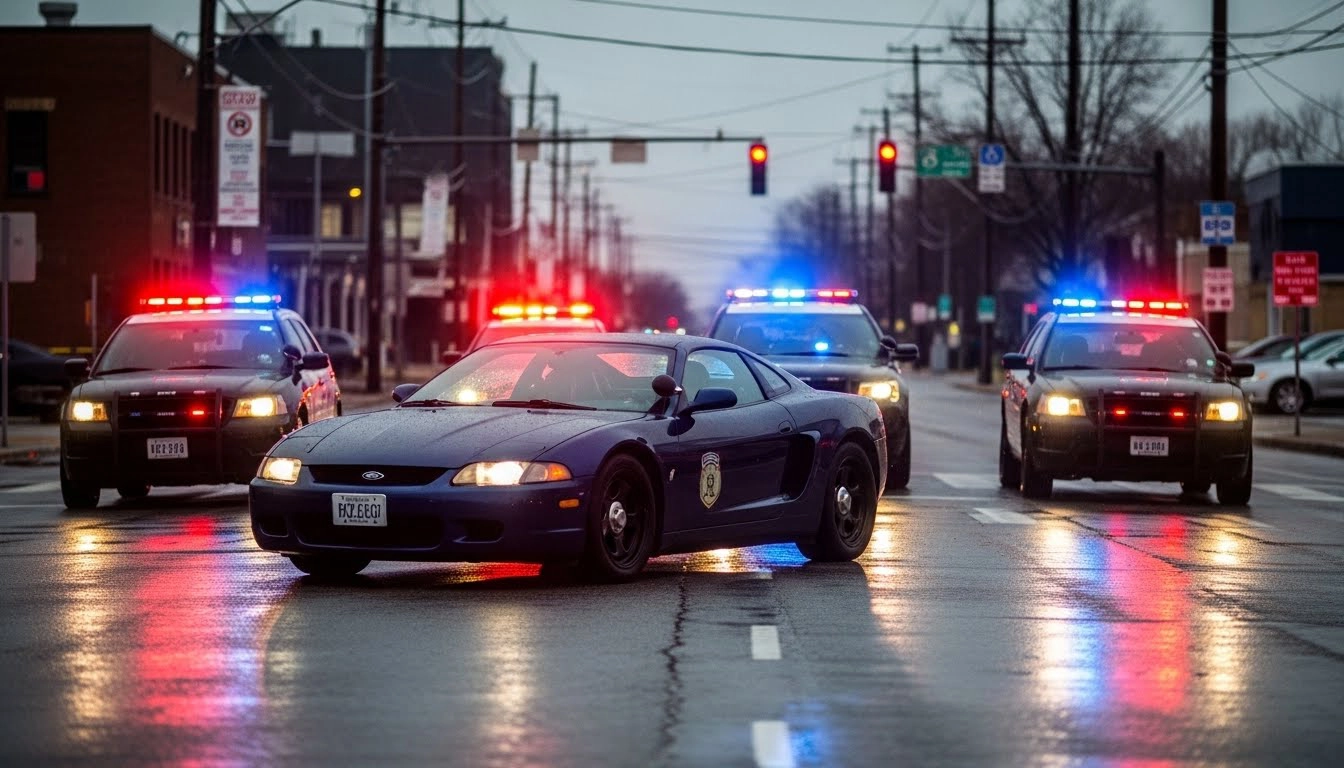
This charge often starts with a routine traffic stop that spirals out of control, sometimes due to panic. Under North Carolina General Statute § 20-141.5, Felony Fleeing to Elude Arrest occurs when a driver:
- Is operating a motor vehicle on a street, highway, or public area;
- Receives a signal from a law enforcement officer (lights and/or siren) to stop;
- Willfully fails or refuses to stop the vehicle;
- And also commits two or more of the following aggravating factors (or drives while their license is revoked for DWI, or causes death/serious injury):
- Speeding more than 15 mph over the limit.
- Grossly negligent driving (including driving on the wrong side, illegal passing, failing to stop at stop signs/lights).
- Driving with a revoked license (for any reason).
- Driving while impaired (DWI).
- Driving with a blood alcohol concentration (BAC) of 0.08 or higher.
- Causing property damage over $1,000.
- Negligently causing serious injury or death (this bumps it up further).
Penalties:
- If the fleeing involves two of the listed aggravating factors, it’s typically a Class H felony.
- If the fleeing involves three or more aggravating factors OR occurs while the driver’s license is revoked for an impaired driving offense, it becomes a more serious Class E felony.
- If the fleeing proximately causes the death of another person, it can be a Class D felony.
- If the fleeing proximately causes serious injury to another person, it can be a Class F felony.
Why “Willfully”? The state has to prove you intentionally refused to stop after recognizing the officer’s signal. Did you actually see the lights or hear the siren? Was it safe for you to pull over immediately? Sometimes, panic or confusion can lead to a delayed stop rather than a willful refusal. This element of intent is something your lawyer will carefully examine.A Less-Discussed Stat: Police pursuits are inherently dangerous, not just for the suspect and officers, but for the public. National data often indicates that a significant number of people killed or injured in police pursuits are innocent bystanders or passengers. While specific North Carolina pursuit outcome data might be harder to find publicly compiled, organizations like the Bureau of Justice Statistics (BJS) have studied pursuit-related fatalities nationwide, highlighting the immense risks involved when someone chooses to flee. This inherent danger is why North Carolina penalizes this crime so severely.
What Does Felony Hit and Run Mean in North Carolina?
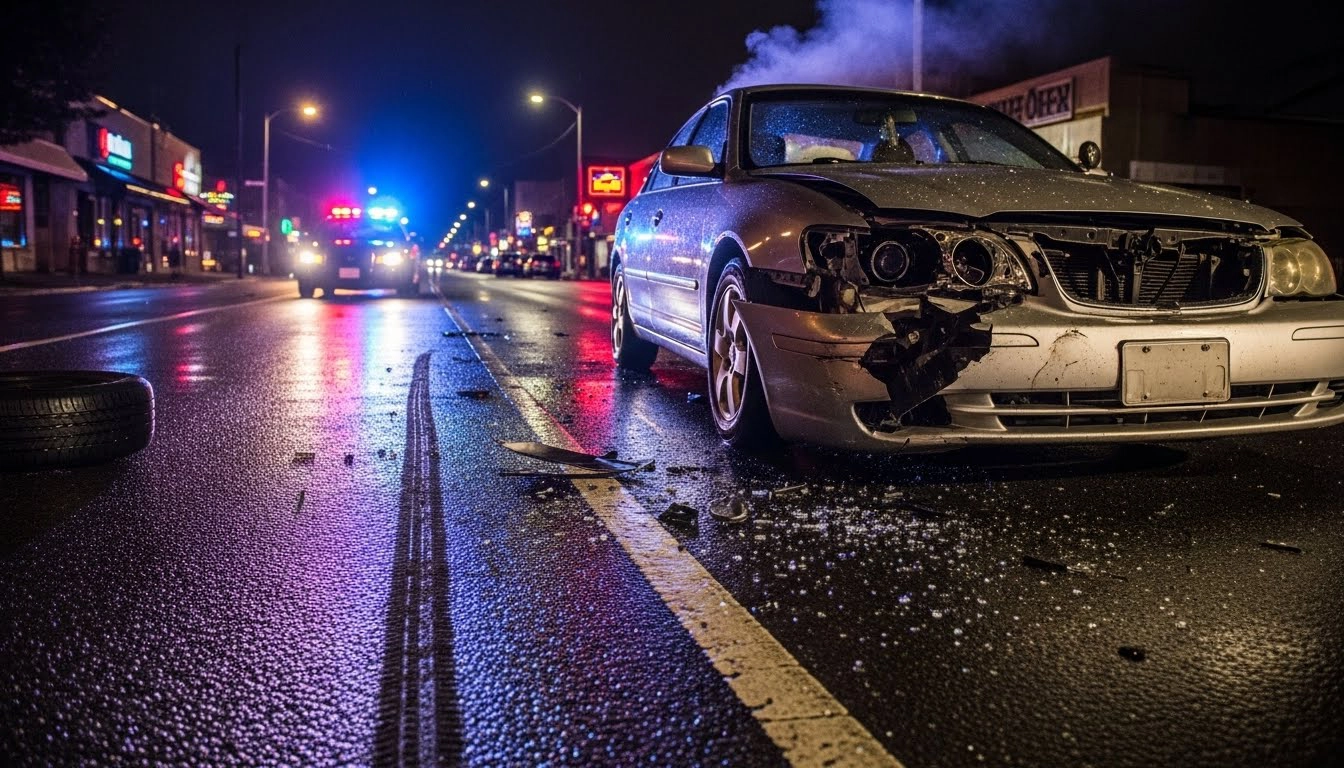
Accidents happen, but leaving the scene of an accident where someone might be hurt is a very serious crime in North Carolina. The law, NC General Statute § 20-166, requires any driver involved in a crash resulting in injury, death, or property damage to take specific actions.
Your Duties After an Accident:
- Immediately stop your vehicle at the scene or as close as possible without obstructing traffic more than necessary.
- Remain at the scene until you have fulfilled all requirements.
- Provide reasonable assistance to anyone injured, including arranging transportation to a hospital if needed or requested (“render aid”).
- Give your name, address, driver’s license number, and vehicle registration number to the other driver(s), occupants, or anyone injured.
- If you hit an unattended vehicle or property, you must locate the owner or leave a note with your information and report the crash to the police.
When Does Hit and Run Become a Felony?
- Property Damage Only: Leaving the scene of an accident involving only property damage is typically a Class 1 misdemeanor.
- Injury or Death: Leaving the scene of an accident involving any level of injury (from minor scrapes to critical) or deathwithout stopping, providing information, and rendering reasonable assistance is a felony.
- If the accident results in serious bodily injury or death, it’s a Class F felony.
- If the accident results in injury less than serious bodily injury, it’s typically a Class H felony.
What if You Didn’t Know You Hit Someone? The law generally requires that the driver knew or reasonably should have known that they were involved in an accident resulting in injury or death. This can be a point of defense. Did you feel an impact? Was it dark? Was the other person visible? Your lawyer will investigate whether the state can prove you knowingly left the scene of an injury accident. Panic or fear after an accident, while understandable, is not a legal excuse for leaving.A Sobering Stat: Hit-and-run crashes are tragically common and often deadly, especially for pedestrians and cyclists. According to data analyzed by organizations like the AAA Foundation for Traffic Safety, hit-and-run fatalities have been trending upwards nationally in recent years. A significant percentage of those killed are people walking or biking. (Source: AAA Foundation for Traffic Safety – Hit-and-Run Research). This alarming trend underscores why North Carolina imposes severe felony penalties for leaving the scene when someone is hurt.
Is Driving While License Revoked (DWLR) Really That Serious in NC?
Yes, it absolutely can be. While it might seem less dramatic than fleeing police or hit and run, Driving While License Revoked (DWLR) under NC General Statute § 20-28 is one of the most frequently charged criminal offenses in North Carolina’s district courts. Many people underestimate how quickly DWLR charges can snowball into major problems.
Why Was Your License Revoked? This is the crucial question.
- DWLR (Not Impaired Revocation): If your license was revoked for reasons other than an impaired driving offense (e.g., too many speeding tickets, failure to pay fines, missing court dates, insurance violations), driving while revoked is typically a Class 3 misdemeanor for a first offense. While it’s the lowest misdemeanor class, a conviction still adds points, extends the revocation period, brings fines, and can technically include jail time (though less common for a first offense if other factors aren’t present). Subsequent offenses can become Class 1 misdemeanors.
- DWLR Impaired Revocation: If your license was revoked specifically because of a DWI or other impaired driving offense, driving while revoked is a much more serious Class 1 misdemeanor, even for a first offense. This carries a higher potential for fines, a longer automatic license revocation (an additional year or more), and a greater likelihood of active jail time. Repeat offenses can even lead to felony charges (Habitual DWLR).
- Permanent Revocation: Driving after a permanent revocation (often resulting from multiple DWIs or extremely serious offenses) can lead to felony charges.
Other Consequences:
- Vehicle Seizure: Law enforcement in North Carolina has the authority to seize your vehicle if you are caught driving while revoked for an impaired driving offense. Getting it back involves significant costs and legal hurdles.
- Insurance: A DWLR conviction makes getting affordable car insurance extremely difficult.
- Points: Convictions add points to your driving record, further impacting insurance and potentially leading to longer suspensions.
A Commonly Missed Fact: Many drivers don’t even realize their license is revoked! Sometimes DMV notices about unpaid tickets, missed court dates, or insurance lapses get lost in the mail or sent to an old address. However, under the law, lack of knowledge that your license was revoked is generally not a defense, although it might be a mitigating factor in some situations. The DMV is only required to mail the notice to your last known address. This is why keeping your address updated with the NCDMV is so important (NCDMV Website). A lawyer can help determine why your license was revoked and if the revocation itself was valid.
What’s the Difference Between Vehicular Manslaughter and Death by Vehicle in NC?
Losing a loved one in a car crash is devastating. When the crash was caused by another driver’s actions, the legal system tries to determine the level of responsibility, which can range from civil liability (a Personal Injury wrongful death lawsuit) to serious criminal charges. North Carolina law distinguishes between different types of vehicle-related homicides based on the driver’s level of fault.
- Misdemeanor Death by Vehicle (NC General Statute § 20-141.4(a2)): This occurs when someone unintentionally causes the death of another person while violating a state law or local ordinance related to vehicle operation (other than impaired driving), and that violation is the proximate cause of the death. Think of cases involving running a stop sign, speeding significantly, or an unsafe movement that leads to a fatal crash, but without impairment or extreme recklessness. This is typically a Class A1 misdemeanor, the most serious class, carrying potential jail time up to 150 days.
- Felony Death by Vehicle (NC General Statute § 20-141.4(a1)): This is charged when someone unintentionally causes the death of another person while Driving While Impaired (DWI) under NCGS § 20-138.1 or § 20-138.2, and the impairment is the proximate cause of the death. This is a Class D felony, carrying mandatory active prison time, often measured in years. Proving the impairment caused the fatal accident is key.
- Aggravated Felony Death by Vehicle: If a person commits Felony Death by Vehicle and has a prior DWI conviction within the past 7 years, the charge can be elevated to Aggravated Felony Death by Vehicle, a Class D felony with potentially even longer prison sentences.
- Felony Serious Injury by Vehicle: Similar to Felony Death by Vehicle, but applies when DWI driving proximately causes a serious injury (not death) to another person. This is typically a Class F felony.
- Second-Degree Murder: In rare and extreme cases, if a driver’s actions demonstrate “malice” – meaning extreme recklessness showing a depraved indifference to human life – they could potentially be charged with Second-Degree Murder (a Class B1 or B2 felony) instead of death by vehicle. This might apply in cases involving extremely high speeds during a police chase that results in death, or driving while grossly impaired with multiple prior DWI convictions.
Key Distinction: The main difference between Misdemeanor and Felony Death by Vehicle is the presence of impaired driving as the cause. Both require proving the driver’s violation caused the death. Defenses often focus on challenging the underlying violation (was the driver truly impaired? Was the other violation actually committed?) or challenging causation (would the accident have happened anyway, even without the violation?). These are incredibly complex and emotionally charged cases requiring a highly experienced criminal defense lawyer.
Why Are These Charges So Serious in North Carolina?
Beyond the immediate potential for jail or prison, convictions for serious motor vehicle crimes carry a heavy weight in North Carolina. The state views driving as a privilege, not a right, and actions that endanger others on the road are penalized severely to deter future conduct and protect the public.
- Permanent Criminal Record: Felonies, and even serious misdemeanors like DWLR Impaired Revocation or Misdemeanor Death by Vehicle, stay on your record permanently, acting as a barrier to jobs, housing, and loans.
- Mandatory Active Time: Several of these offenses, particularly Felony Death by Vehicle and higher levels of Fleeing to Elude, often come with mandatory minimum prison sentences that a judge cannot suspend.
- Extreme License Consequences: Revocations can last for years or become permanent, drastically impacting your ability to work, care for family, and live independently. Getting your license back often involves costly steps like ignition interlock devices or completing treatment programs.
- Financial Ruin: Fines, court costs, restitution to victims, dramatically increased insurance premiums (assuming you can even get coverage), and lost earning potential due to incarceration or license revocation can lead to severe financial hardship.
- Collateral Consequences: As mentioned, impacts can ripple into professional licensing, child custody matters (Family Law), immigration status, and the right to own firearms (for felony convictions).
These aren’t just driving mistakes; they are life-altering criminal convictions. Seeking the best possible legal defense is not a luxury, it’s a necessity.
How Can a Lawyer Defend Against These Serious Charges in North Carolina?
Even when facing serious charges like these, there are always potential defenses. An experienced North Carolina criminal defense lawyer will meticulously dissect the prosecution’s case, looking for weaknesses and ways to protect your rights. Defense strategies are tailored to the specific charge:
- Felony Fleeing to Elude: Challenging the “willfulness” element (did you know you were being signaled?), disputing whether enough aggravating factors actually occurred (was the speed really 15+ over? Was the driving truly “grossly negligent”?), arguing procedural errors in the stop or pursuit.
- Felony Hit and Run: Challenging whether you knew or should have known an injury occurred, presenting evidence that you did stop nearby or attempt to render aid/provide information, disputing the severity of the injury (difference between Class H and F felony), arguing mistaken identity if you weren’t positively identified as the driver.
- Driving While License Revoked (DWLR): Verifying that the license revocation itself was valid and that you received proper notice from the NCDMV, challenging the reason for the initial traffic stop, arguing lack of knowledge of the revocation (difficult, but sometimes possible in specific circumstances), negotiating for dismissal upon obtaining a valid license (sometimes possible for lower-level DWLR).
- Vehicular Manslaughter / Death by Vehicle: Challenging the underlying violation (e.g., proving you weren’t impaired for Felony Death by Vehicle, or that the non-impairment violation didn’t occur for Misdemeanor Death by Vehicle), arguing lack of proximate cause (proving the death would have happened even without the violation, perhaps due to the victim’s actions or other factors), presenting accident reconstruction evidence contradicting the state’s theory of the crash.
Beyond specific defenses, a good lawyer will also file pre-trial motions to suppress illegally obtained evidence (e.g., statements taken without Miranda warnings, evidence from an illegal search), negotiate vigorously with the prosecutor for charge reductions or alternative resolutions, and, if necessary, prepare a compelling case for trial before a judge or jury. Having a lawyer familiar with the courts in Greensboro, Winston-Salem, and the surrounding counties is crucial for effective negotiation and strategy.
Key Takeaways for Serious NC Motor Vehicle Crime Charges
- Offenses like Felony Fleeing, Felony Hit & Run, DWLR Impaired Revocation, and Death by Vehicle are serious crimes, not just traffic tickets.
- Convictions carry potential prison time, lengthy license revocations, huge fines, and a permanent criminal record.
- Felony Fleeing requires willful refusal to stop plus specific aggravating factors.
- Felony Hit & Run applies when leaving the scene of an accident involving any injury or death.
- DWLR penalties depend heavily on why your license was revoked (especially if DWI-related).
- Death by Vehicle charges depend on whether impairment or another traffic violation caused the death.
- There are always potential defenses; an arrest doesn’t guarantee conviction.
- Never talk to the police about the incident without a lawyer present.
- Contacting an experienced NC criminal defense lawyer immediately is critical to protect your rights and future.
Serious motor vehicle charges demand a serious defense. If you’re facing felony fleeing, hit and run, DWLR, or vehicle homicide charges in Greensboro, Winston-Salem, High Point, Burlington, Asheboro, Graham, Kernersville, or anywhere in the Piedmont Triad, the Huggins Law Firm is ready to protect your rights. Our experienced Criminal Law team understands the stakes. Contact us today for a confidential consultation.