
A “Simple” Charge with Complicated Consequences

Of all the drug crimes in North Carolina, simple possession is the most common. It’s a charge that can happen to anyone, anywhere—a college student in Greensboro, a hardworking parent in Asheboro, a professional in Winston-Salem. Because it’s so common, many people make the mistake of thinking it’s not a big deal. They think, “It’s just a little bit, it’s my first time in trouble, I’ll just pay the fine and move on.”
This is one of the most dangerous misconceptions you can have.
There is no such thing as a “simple” drug charge. A conviction for simple possession, even for a misdemeanor, creates a permanent criminal record that can follow you for the rest of your life. It can be a barrier to getting a job, renting an apartment, getting a professional license, or even getting a student loan. It is not something to take lightly.
If you have been charged with simple possession, you are in a tough spot, but you are not out of options. For decades, the team at the Huggins Law Firm has been defending people across the Piedmont Triad from these exact charges. We understand that good people make mistakes, and we believe that one mistake should not ruin your entire future. This guide is here to explain the charge you’re facing and, more importantly, what we can do to fight it.
Misdemeanor vs. Felony: How Possession is Charged in North Carolina
In a simple possession case, the seriousness of the charge depends almost entirely on the type and amount of the drug involved.
- Marijuana: This is the most common charge we see. Possession of up to half an ounce of marijuana is a Class 3 misdemeanor. Possession of between half an ounce and 1.5 ounces is a Class 1 misdemeanor. Anything over 1.5 ounces becomes a Class I felony.
- Cocaine, Heroin, Methamphetamine: Possession of any amount of these Schedule I and II substances is an automatic Class I felony. This is a critical point. Even a tiny amount of residue in a baggie can lead to a felony charge.
- Prescription Drugs (Xanax, OxyContin): Possession of these drugs without a valid prescription is also a felony in many cases.
- Drug Paraphernalia: Possession of an item like a pipe, bong, or even rolling papers is typically a Class 1 misdemeanor.
As you can see, the penalties can escalate very quickly. A conviction for a felony carries the risk of prison time and the loss of significant civil rights, like the right to own a firearm.
The State’s Burden: What Does a Prosecutor Have to Prove?
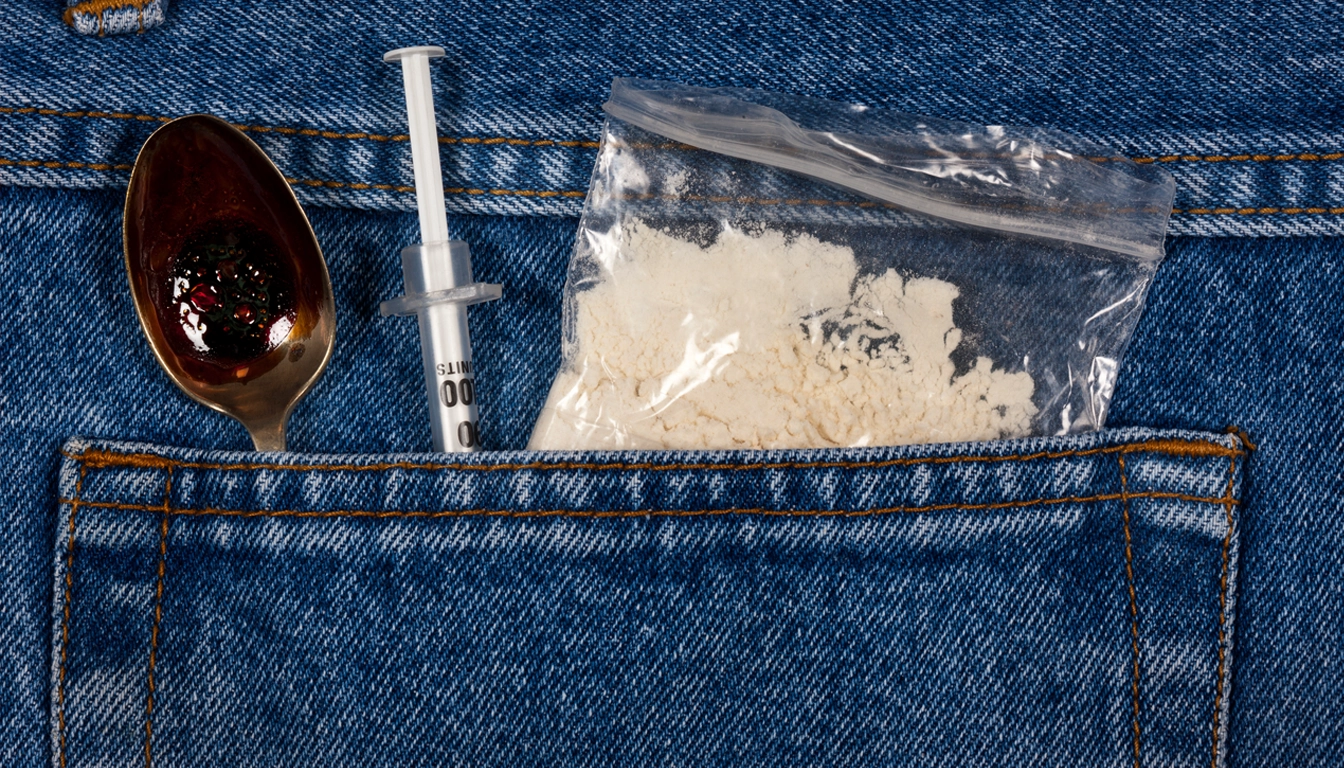
An arrest is not a conviction. To find you guilty, the prosecutor has to prove, beyond a reasonable doubt, that you “possessed” the controlled substance. This sounds simple, but the legal definition of possession is more complicated than you think.
There are two types of possession in North Carolina:
- Actual Possession: This is the easy one. The drugs were found on your person—in your pocket, in your hand, in your sock.
- Constructive Possession: This is where most legal battles are fought. Constructive possession means the drugs were not on you, but you had both the intent and the capability to control them. This applies when drugs are found in a car’s glove box, under a seat, or in a living room with multiple people present.
Just because you were near the drugs does not mean you possessed them. The prosecutor has to prove you knew they were there and that you had control over them. This is often very difficult for them to prove.
The Foundation of Your Defense: Attacking the Stop and the Search
The most powerful defenses to a simple possession charge often have nothing to do with the drugs themselves. They have to do with your constitutional rights and whether the police violated them. The Fourth Amendment protects you from unreasonable searches and seizures.
Our investigation into your case begins by asking a series of tough questions about the police’s conduct.
- Was the traffic stop legal? If your case started with a traffic stop, the officer must have had a “reasonable suspicion” to pull you over. They can’t stop you on a hunch. If we can show the stop was illegal, any evidence found as a result of that stop—including the drugs—is thrown out.
- Did you consent to the search? If an officer asks, “Do you mind if I search your car?” your answer should always be a polite but firm “No.” You are not required to consent to a search. If you say yes, you are giving up one of your most important constitutional rights.
- Did they have probable cause to search? If you don’t consent, the police need a warrant or “probable cause” to search your car or your home. Did they see the drugs in plain view? Did they have a reliable tip? If they searched without probable cause, the search was illegal, and the evidence is inadmissible.
- Can they prove constructive possession? If drugs were found in a car with multiple people, who did they belong to? We can argue that you were just a passenger and had no knowledge or control over what was in the car.
A “less talked about” stat comes from digging into the NC State Bureau of Investigation (SBI) crime data. In many years, arrests for simple marijuana possession make up a huge percentage of all drug arrests in the state. Many of these arrests begin with a simple traffic stop. It shows how often constitutional issues related to traffic stops and vehicle searches can become the central issue in a drug case. Building a strong defense starts with defending your rights.
Why an Experienced Drug Possession Lawyer is Your Best Defense

Facing a possession charge on your own is a huge risk. The system is confusing, and the stakes are high. The best thing you can do is find a lawyer “near me” who has deep experience fighting these specific cases in the local courts of Guilford, Alamance, or Randolph County.
As your drug possession lawyers, our mission is to protect your future.
- We are your shield. We protect you from the police and the prosecutor. From the moment you hire us, they have to talk to us, not you.
- We are your investigators. We get our hands on all the evidence—the police report, the body camera footage, the lab results—and we look for the weaknesses in the state’s case.
- We are your fighters. We will fight to get the evidence against you suppressed. We will fight to get your charges dismissed. And if we can’t get a dismissal, we will fight for a deferred prosecution or a conditional discharge (a “90-96”) that can keep a conviction off your record.
Our deep experience in criminal defense is your greatest asset in this fight. We understand that your future is on the line.
Key Takeaways for Your North Carolina Possession Charge
- There is no “simple” drug charge. Even a misdemeanor conviction creates a permanent criminal record that can affect your life for years.
- Possession can be a felony. Possession of even a tiny amount of drugs like cocaine or heroin is a felony in North Carolina.
- Just being near drugs is not enough. The state has to prove you had knowledge and control over the substance, which is often difficult for them to do.
- Your constitutional rights are your best defense. Many possession cases are won by proving that the police conducted an illegal stop or an unconstitutional search.
- A lawyer can fight to protect your record. An experienced drug crime lawyer can challenge the state’s evidence and fight for a dismissal or a diversion program to keep a conviction off your record.