
The Flash of Blue Lights: Your Life Just Changed, Now What?
The blue lights flash in your rearview mirror. Your heart sinks. A million thoughts race through your mind as you pull over on a road in Greensboro or Winston-Salem. “How many drinks did I have?” “Am I in trouble?” “What is this going to do to my job? My family?”
A DWI charge in North Carolina is not a traffic ticket. It is a serious criminal offense with consequences that can follow you for the rest of your life. It’s a scary, confusing, and overwhelming experience. You feel like you’ve already been found guilty.
But here’s the most important thing you need to hear right now: An arrest is not a conviction.
If you are reading this, you are in a tough spot. We get it. For many years, the team at the Huggins Law Firm has been helping hardworking people in the Piedmont Triad—from Asheboro to Burlington, Graham to High Point—navigate the complexities of a DWI charge. We believe that every person deserves a strong defense. Our job is to be your guide, your advocate, and your fighter through this difficult process. This guide is your first step. It’s here to give you clear, honest information about what you are facing and what you can do about it.
DWI vs. DUI: What’s the Difference in North Carolina?
First, let’s clear up some confusion. You’ll hear people use the terms DWI and DUI interchangeably.
- DWI stands for “Driving While Impaired.”
- DUI stands for “Driving Under the Influence.”
In North Carolina, the official legal term for this offense is DWI. The main statute, North Carolina General Statute § 20-138.1, covers it all. This law makes it illegal to drive a vehicle on a public road while:
- Under the influence of an impairing substance; or
- Having a blood alcohol concentration (BAC) of 0.08% or higher; or
- With any amount of a Schedule I controlled substance (like heroin or LSD) in your system.
So, whether it’s alcohol, marijuana, prescription pills, or illegal drugs, it all falls under the umbrella of a DWI charge in our state.
The DWI Stop: From Reasonable Suspicion to Field Sobriety Tests
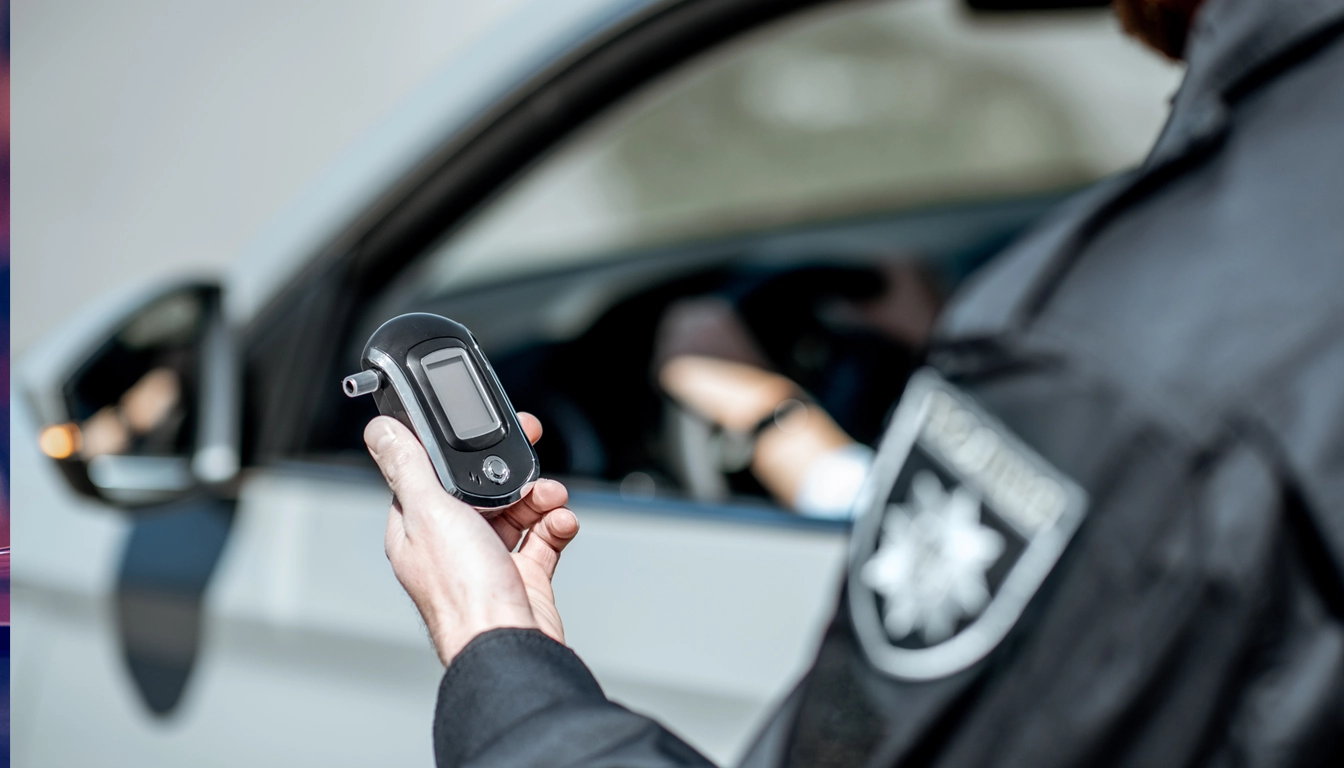
Every DWI case begins with a traffic stop. A police officer cannot pull you over for no reason. They must have what the law calls “reasonable suspicion” that you have violated a traffic law. This could be anything from speeding or weaving to having a broken taillight.
Once you are pulled over, the officer will be looking for signs of impairment. They will be observing your eyes, listening to your speech, and smelling for any odor of alcohol. If they suspect you have been drinking, they will ask you to step out of the car to perform Standardized Field Sobriety Tests (SFSTs).
You have probably seen these on TV. There are three approved tests:
- The Horizontal Gaze Nystagmus (HGN) Test: The officer will ask you to follow a pen or their finger with your eyes to look for an involuntary jerking of the eye.
- The Walk-and-Turn Test: You will be asked to walk nine steps, heel-to-toe, down a straight line, turn, and walk back.
- The One-Leg Stand Test: You will be asked to stand on one leg and count to 30.
Here is a critical piece of information: In North Carolina, you have the right to refuse to take these roadside tests. They are notoriously difficult to perform even when completely sober, and the officer is grading you subjectively. Refusing these tests does not carry a penalty like refusing a breathalyzer at the station does.
The Arrest and the Breathalyzer: Understanding “Implied Consent”
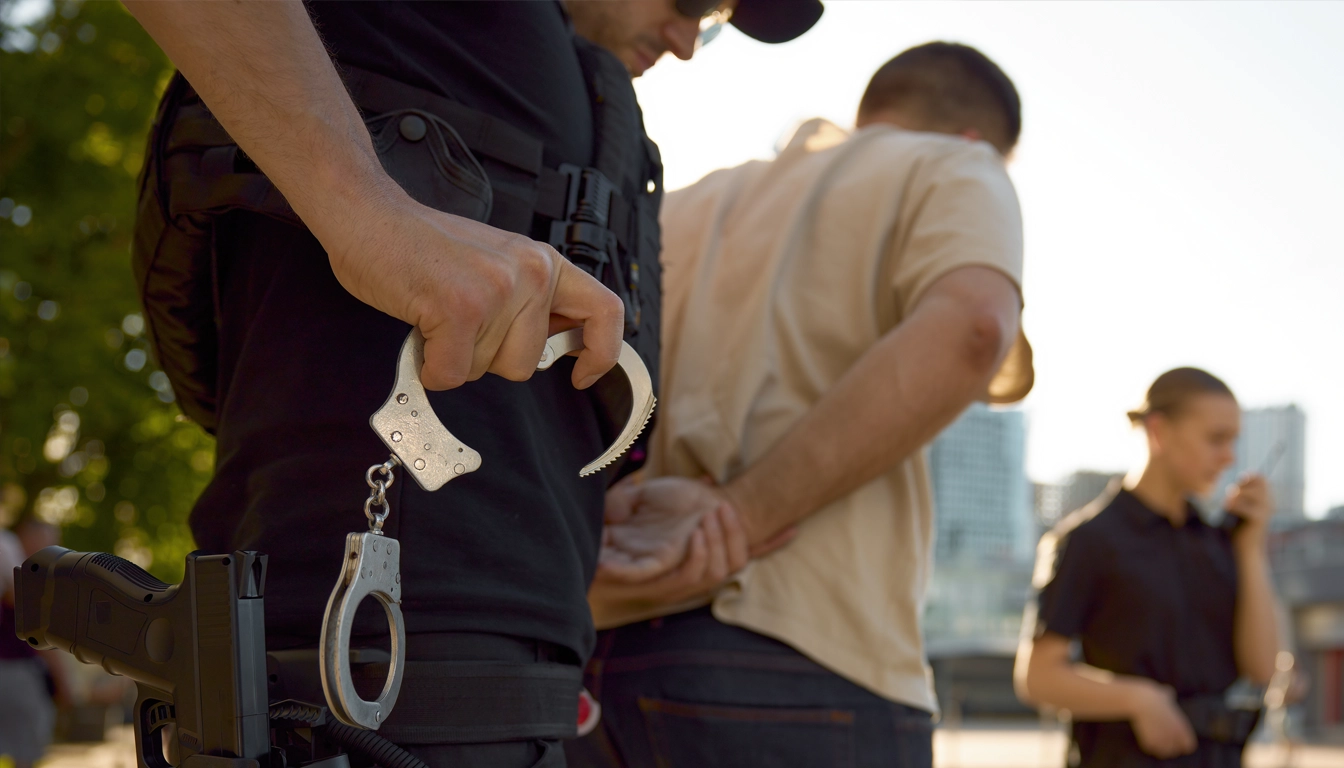
If, based on their observations and the field sobriety tests (if you took them), the officer believes they have “probable cause” to arrest you for DWI, they will place you in handcuffs.
After you are arrested, you will be taken to the police station or a mobile testing unit, and you will be asked to submit to a chemical test to determine your BAC. This is usually a breathalyzer test (the Intox EC/IR II is the machine used in North Carolina).
This is where the law gets very serious. It’s called “Implied Consent.” Under North Carolina law, by driving on our roads, you have automatically given your consent to take a chemical test if you are lawfully arrested for a DWI.
- You can still refuse, but a refusal comes with its own severe and immediate penalty: the DMV will automatically revoke your driver’s license for one full year. This happens even if you are ultimately found not guilty of the DWI.
It’s a tough choice to make in a stressful moment. The best thing you can do is to be polite and ask to speak with a lawyer as soon as possible.
The 30-Day Revocation: The First Consequence of a DWI Charge
Here is another immediate consequence that catches many people by surprise. If you are charged with a DWI and your breathalyzer result is 0.08% or higher (or if you refuse the test), the officer will take your driver’s license on the spot.
This triggers an immediate 30-day civil license revocation. For the first 10 days, you cannot drive at all. After 10 days, an experienced DWI lawyer can often help you get a “Limited Driving Privilege,” which allows you to drive for work, school, and household maintenance. But for 30 days, your regular license is gone. This happens before you ever step foot in a courtroom.
The 5 Levels of Misdemeanor DWI: North Carolina’s Sentencing Maze
This is where a DWI case in North Carolina gets incredibly complicated. If you are convicted of a misdemeanor DWI, the judge doesn’t just pick a punishment. They must follow a rigid sentencing system laid out in the law (N.C.G.S. § 20-179).
The judge will weigh the “aggravating factors” (things that make the offense worse) against the “mitigating factors” (things that can help your case).
- Grossly Aggravating Factors: These are the most serious and include things like having a child under 18 in the car, causing a serious injury to another person, or having a prior DWI conviction within the last seven years.
- Aggravating Factors: These include a high BAC (0.15% or higher), reckless driving, or causing an accident.
- Mitigating Factors: These are things that can help you, like having a safe driving record, having a low BAC (0.09% or less), or completing a substance abuse assessment and the recommended treatment.
The judge then does the math and sentences you at one of six levels. Aggravated Level One is the most serious misdemeanor, and Level Five is the least serious.
| DWI Level | Mandatory Minimum Jail Time | Maximum Jail Time |
| Aggravated Level One | 12 months | 36 months |
| Level One | 30 days | 24 months |
| Level Two | 7 days | 12 months |
| Level Three | 72 hours (or community service) | 6 months |
| Level Four | 48 hours (or community service) | 120 days |
| Level Five | 24 hours (or community service) | 60 days |
As you can see, the stakes are incredibly high. A DWI is not just about fines. It involves mandatory jail time for the higher levels. The difference between a Level Two and a Level Five sentence can come down to one single aggravating or mitigating factor.
Why an Experienced DWI Lawyer is Your Most Important Ally
Navigating this system on your own is nearly impossible. An experienced DWI defense lawyer is not just helpful; they are essential.
Our job is to be your guide through this chaotic process.
- We challenge the stop. Was the traffic stop legal in the first place? If the officer didn’t have a valid reason to pull you over, the entire case can be thrown out.
- We challenge the tests. We are trained in the same manuals as the police. We know the strict procedures for administering field sobriety tests and the breathalyzer. Was the machine calibrated correctly? Did the officer give the instructions properly? We look for any mistake to challenge the evidence against you.
- We fight for you at sentencing. We make sure every single possible mitigating factor is presented to the judge. We help you get your substance abuse assessment done early. Our goal is to fight for the lowest possible sentencing level, to keep you out of jail, and to protect your ability to drive. A little-known fact is that a judge has a lot of discretion. According to a study by the UNC School of Government, which provides critical resources for our state’s justice system, the way evidence is presented at a sentencing hearing can have a huge impact on the outcome. Our experienced DWI lawyers know how to present your story in the most compelling way.
This is more than just a case for us. It’s about protecting your job, your family, and your future. You can learn more about our firm’s deep experience with criminal defense on our website.
Key Takeaways for Your North Carolina DWI Case
- An Arrest is Not a Conviction: You are presumed innocent, and the state has to prove its case beyond a reasonable doubt.
- DWI is a Serious Crime: In North Carolina, a DWI is not a simple traffic ticket. It carries the risk of jail time, heavy fines, and a permanent criminal record.
- The 30-Day Rule is Immediate: If you blow a 0.08 or higher, or refuse the test, your license will be immediately revoked for 30 days.
- The 5 Sentencing Levels are Complex: The punishment you face depends on a complicated balancing of aggravating and mitigating factors.
- You Have Rights: You have the right to refuse roadside field sobriety tests, and you have the right to have an experienced DWI lawyer fighting for you at every step.
Resources for Alcohol-Related Problems in North Carolina
Statewide and Regional Resources
- North Carolina Department of Health and Human Services (NCDHHS) This is the primary state-run resource. Their website can help you locate licensed substance abuse treatment programs, including detox facilities, outpatient counseling, and inpatient programs across the state. They manage the publicly funded services available to residents.
- Alcoholics Anonymous (AA) of North Carolina AA offers a peer-support model that is one of the most well-known and accessible resources for people struggling with alcohol addiction. Their statewide website has a meeting finder to help you locate a local group “near me” for daily support and community.
- The UNC School of Medicine – Alcohol and Substance Abuse Program Located in Chapel Hill, the ASAP program at UNC is a leading academic center for addiction treatment. They offer comprehensive evaluations, outpatient services, and intensive programs designed to address the underlying causes of alcohol dependency. This is an excellent resource for evidence-based medical and psychological treatment.
Specific Programs Often Used for DWI-Related Requirements
When a person is charged with a DWI in North Carolina, the court often requires them to undergo a substance abuse assessment and complete recommended treatment. The following organizations are among those licensed to provide these specific services.
- Freedom House Recovery Center Serving the Triangle area (Chapel Hill, Durham, Raleigh) and surrounding counties, Freedom House provides a wide range of services, including DWI assessments, short-term and long-term treatment programs, and recovery support.
- Monarch Monarch is a large non-profit that offers behavioral health and substance abuse services across many parts of North Carolina. They provide assessments, outpatient therapy, and other critical support services that can fulfill court requirements and help individuals on their path to recovery.