
A Felony Charge for Opening a Door

When you think of “breaking and entering,” you probably picture someone smashing a window in the middle of the night. But in North Carolina, the law is much broader and much more serious than most people realize.
Did you know that simply opening a closed but unlocked door to a building without permission can be considered a “breaking”? Did you know that reaching into an open car window to take something can be an “entering”? A simple act that you thought was a minor trespass can result in a serious felony charge.
If you have been charged with breaking and entering in Greensboro, Asheboro, or anywhere in the Piedmont Triad, you are in a serious legal situation. This is not a charge you can talk your way out of. A conviction will leave you with a permanent felony record and the risk of a prison sentence.
For decades, our team at the Huggins Law Firm has been defending people against these complex and often misunderstood charges. We know how to challenge the state’s case and fight to protect your future. This guide is here to explain the law and your rights.
Breaking and Entering a Building vs. a Car: The Different Charges
The first thing to understand is that North Carolina has several different types of breaking and entering crimes.
Felony Breaking or Entering (Buildings)
This is the most common charge, found in N.C.G.S. § 14-54(a). To convict you of this crime, the prosecutor must prove that you:
- Broke into or entered;
- Any building;
- Without consent;
- With the intent to commit any felony or larceny therein.
This is a Class H felony.
Felony Breaking or Entering a Motor Vehicle
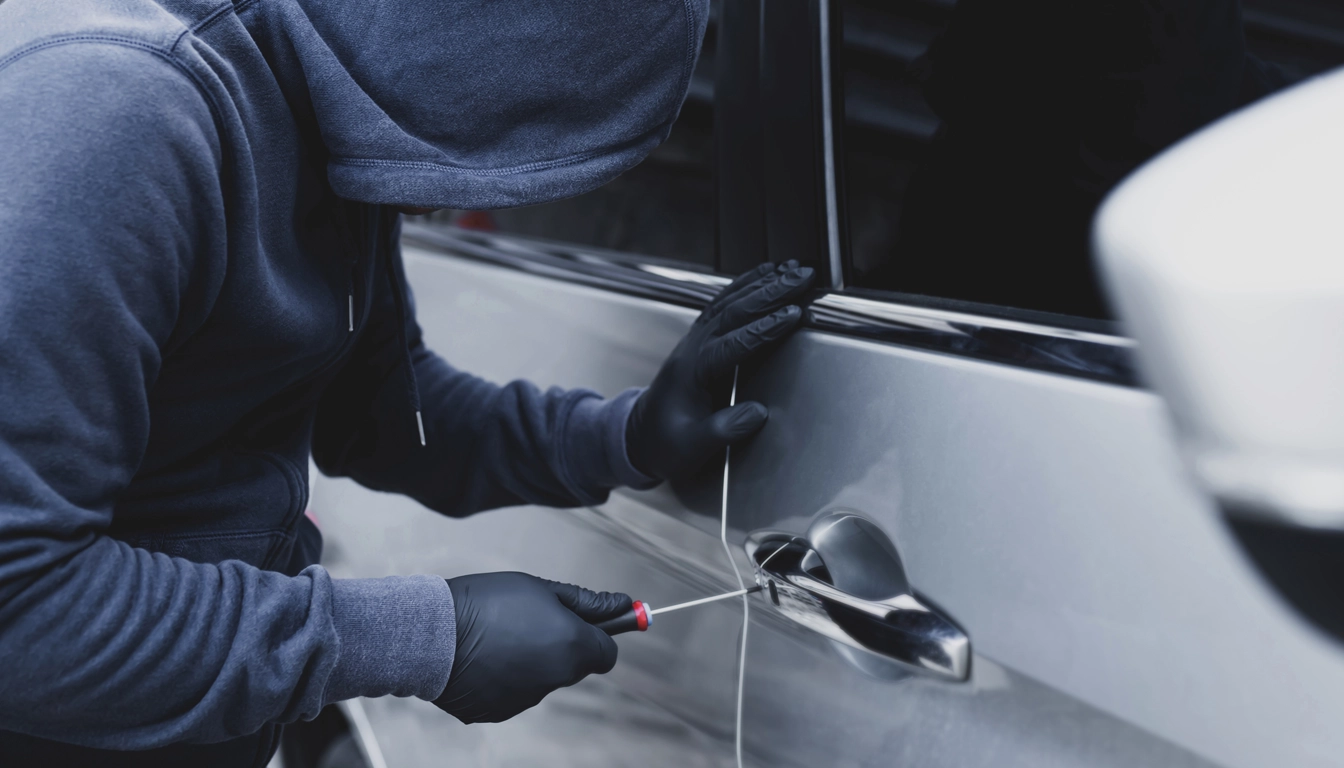
This is a separate but similar crime, found in N.C.G.S. § 14-56. It involves the same elements, but applies specifically to cars, trucks, boats, or other motor vehicles. This is a Class I felony.
A “less talked about” stat from the NC State Bureau of Investigation (SBI) data often shows a breakdown of property crimes. In many years, the number of reported “Breaking and Entering” incidents is huge, and a very significant portion of those are into vehicles, not just homes or businesses. It’s an incredibly common charge.
The Critical Element: Proving Your “Intent”
In any B&E case, the most important word is “intent.” It is not a crime to just enter a building without permission. That would be trespassing, which is a misdemeanor.
To convict you of the felony, the prosecutor has to prove, beyond a reasonable doubt, what was in your mind at the moment you entered. They have to prove that you entered with the intent to commit a felony or a larceny (theft) inside.
This is where many of these cases are won or lost.
How does the state prove your intent?
- They will use your actions. Did you take anything? Did you have tools with you?
- They will use your words. Did you confess to the police? (You should never do this).
- They will ask the jury to make an inference. If you broke into a house in the middle of the night, a jury can infer that you were there to steal something.
Our job as your criminal defense lawyer is to show the jury that there is another, innocent explanation for your actions.
A Meticulous Investigation: How We Build Your Defense
When we take on a breaking and entering case, our first job is to become investigators. We dissect the state’s case and build a powerful defense based on the facts.
1. We Challenge the “Breaking.” What does “breaking” actually mean? It doesn’t have to be violent. As we said, opening a closed door is a breaking. But what if the door was already wide open? What if a window was already broken? If there was no “breaking,” the charge can be challenged.
2. We Challenge the “Entering.” Did you actually enter the building or car? Was your whole body inside, or just a hand? The specific details of the “entering” can be a key point of legal argument.
3. We Challenge the “Intent.” This is the most powerful defense. We work to show that you did not have the required “felonious intent.”
- Were you just looking for a place to get out of the rain?
- Were you intoxicated and confused, and you thought it was your own house?
- Were you trying to retrieve your own property that you believed you had a right to?
If we can show that you had no intent to steal or commit a felony, the charge must be reduced to a simple misdemeanor trespass, which has a much less severe penalty and is easier to get off your record.
4. We Challenge the Evidence. Did the police have a legal reason to stop and search you? Were you properly identified by the witness? We protect your constitutional rights at every step.
Why an Experienced B&E Lawyer is Your Best Defense

A breaking and entering charge is a serious felony. A conviction will change your life. You need a lawyer with deep experience fighting these specific charges in the local courts of Greensboro, Winston-Salem, and the surrounding counties.
- We are meticulous investigators. Our approach is to dig into the details of the police report, the witness statements, and the physical evidence. We find the weaknesses in the state’s case that other lawyers might miss.
- We know how to tell your story. We understand that there are two sides to every story. Our job is to present your side to the prosecutor or the jury in a compelling, believable way.
- We fight to protect your future. Our goal is always to get the felony charge dismissed or reduced. We understand that your future is on the line, and we fight to protect it.
Our deep experience in criminal defense is your greatest asset in this fight.
Key Takeaways for Your North Carolina Breaking and Entering Charge
- A “Breaking” Can Be as Simple as Opening a Door: You don’t have to smash a window to be charged with this crime.
- The Case is All About Your “Intent”: To convict you of a felony, the prosecutor must prove you entered with the intent to commit a felony or larceny inside.
- B&E is a Serious Felony: A conviction can lead to prison time and a permanent felony record that will follow you for life.
- There are Powerful Defenses: An experienced lawyer can challenge the state’s evidence on the “breaking,” the “entering,” and, most importantly, your “intent.”
- Don’t Talk to the Police: If you are being questioned about a B&E, the only words you should say are, “I want to speak with my lawyer.”