
DUI checkpoints in Greensboro, NC, are a common sight, especially during weekends and holidays. This guide is for drivers in Greensboro and Guilford County who want to understand how DUI checkpoints work, what their rights are, and how to respond if stopped. Knowing the rules and your rights at these checkpoints is crucial to protect yourself and avoid unnecessary legal trouble. Whether you’re commuting through Greensboro, High Point, or anywhere in Guilford County, understanding DUI checkpoints can help you stay safe and informed.
At Huggins Law Firm, P.C., our team has seen how these stops work from the inside out. We know the rules the police have to follow. If they don’t follow those rules, your case might not belong in court at all. We want to help you understand your rights so you don’t feel powerless.
DUI Checkpoints in Greensboro, NC: Key Facts
- DUI checkpoints in Greensboro, NC, are legal roadblocks used by law enforcement to detect impaired drivers, verify licenses, and improve road safety.
- Checkpoints are legal in North Carolina as long as they follow specific guidelines established by the courts.
- Law enforcement must predesignate a pattern for stopping vehicles at DUI checkpoints to avoid arbitrary stops.
- Checkpoints must be announced in advance and be clearly visible to drivers, with at least one vehicle operating flashing blue lights.
- The Guilford County Sheriff’s Office and local news outlets often announce upcoming DUI checkpoints on social media and news platforms.
- The main goal is to enhance road safety by removing impaired drivers, verifying licenses, and detecting other violations such as outstanding warrants.
- Impaired driving is a serious offense in North Carolina, carrying significant legal consequences for those charged with a DUI or DWI offense.
- In 2022, NC State Highway Patrol made over 18,000 DWI arrests, many of which resulted from road checks.
- Research indicates that DUI checkpoints help discourage impaired driving by increasing drivers’ awareness of potential stops.
- Drivers are required to show identification and vehicle-related documents (license, registration, insurance) at DUI checkpoints.
- You are not required to answer further questions beyond providing those documents.
- Drivers have the right to refuse field sobriety tests at DUI checkpoints, but refusal may lead to arrest as it can be seen as an admission of guilt.
- If arrested for DWI, you must submit to a chemical analysis (breath or blood test) under implied consent laws; refusal can result in a one-year license suspension.
- Drivers may legally turn around before a DUI checkpoint if done safely and without breaking any traffic laws, but this may draw police attention.
Introduction to Sobriety Checkpoints
Sobriety checkpoints—sometimes called DUI checkpoints—are temporary roadblocks set up by law enforcement agencies to catch and deter drunk driving. In North Carolina, these checkpoints are a common sight, especially during holidays or weekends when impaired driving incidents tend to spike. Law enforcement uses these checkpoints as a proactive way to keep roads safer by identifying drivers who may be under the influence of alcohol or drugs. North Carolina law allows these checkpoints as long as officers follow strict legal guidelines, ensuring that the process is fair and constitutional. The main goal is to reduce accidents and save lives by stopping impaired drivers before tragedy strikes. If you’re driving in North Carolina, it’s important to know that these checkpoints are legal, and understanding how they work can help you navigate them with confidence.
Legal Basis and Procedures for DUI Checkpoints in Greensboro, NC
DUI checkpoints in Greensboro, NC, are legal roadblocks used by law enforcement to detect impaired drivers, verify licenses, and improve road safety. These checkpoints are permitted in North Carolina as long as they adhere to specific guidelines established by the courts. Another term for DUI checkpoints is “checking stations,” and their legal framework is governed by statutes such as G.S. 20-16.3A, which outlines procedural requirements and documentation standards. Law enforcement agencies must predesignate a pattern for stopping vehicles at DUI checkpoints to avoid arbitrary stops, and North Carolina law requires that sobriety checkpoints be announced in advance and be clearly visible to drivers. At least one vehicle at a DUI checkpoint must operate flashing blue lights to clearly identify the law enforcement operation.
DUI checkpoints ordinarily involve standardized patterns for stopping vehicles and the use of portable breath tests (PBTs) and Standardized Field Sobriety Tests (SFSTs). Drivers are required to show identification and vehicle-related documents at DUI checkpoints in North Carolina, but are not required to answer further questions beyond providing those documents. Drivers have the right to refuse field sobriety tests at DUI checkpoints, but this may lead to arrest as it can be seen as an admission of guilt. If arrested for DWI, a person must submit to a chemical analysis (breath or blood test) under implied consent laws, and refusal can result in a one-year license suspension. Drivers may legally turn around before a DUI checkpoint if done safely and without breaking traffic laws, but this may attract police attention.
If a checkpoint or checking station is not conducted according to the established plan, it may be deemed unconstitutional and any evidence obtained could be suppressed in court.
Key Takeaways: Your Quick Guide to Checkpoints
- Checkpoints are legal only if police follow a strict written plan.
- You have rights: You don’t have to admit to drinking or allow a search without cause.
- Police mistakes can help your case: Errors in paperwork or testing procedures may be used in your defense.
- Checkpoints are often in high-visibility locations: Knowing common spots in Greensboro and Guilford County helps you stay prepared.
- Get legal help quickly: A lawyer can review if the checkpoint followed all required rules and challenge its legality if not.
Are DUI Checkpoints in Greensboro NC Legal?
Yes, North Carolina DUI checkpoints are legal, but it isn’t a “free-for-all” for the police. The U.S. Supreme Court says these stops are okay because they keep people safe, even though the United States Constitution and NC Fourth Amendment rights usually say police need a reason to pull you over.
Think of it like a school project. If the teacher says you can have a pizza party, but only if everyone wears a red shirt, and then the teacher lets in people with blue shirts, the rules are broken. For Guilford County sobriety checkpoints, the police must have a written plan before they start. Officers may use random checks, such as stopping every third car, as long as they follow the written plan. Both officers and drivers must also follow all applicable traffic laws during these stops. If they deviate from that plan—like stopping every third car instead of every car—the whole checkpoint might be considered “unreasonable” under the law.
Where do these checkpoints happen near me?
In our experience helping people across the Triad, we see checkpoints pop up in the same best spots for police visibility:
- Greensboro: Battleground Avenue, West Market Street, and near UNCG.
- High Point: Main Street and Eastchester Drive.
- Winston-Salem: Stratford Road and Hanes Mall Blvd.
- Kernersville: Near the main highway exits where traffic is heavy.
- Burlington and Graham: Often near the downtown bars or interstate ramps.
Motorists should be aware of their rights and responsibilities when passing through these DUI checkpoint locations.
Understanding North Carolina DUI Laws
North Carolina takes impaired driving seriously, with some of the toughest DUI laws in the country. Law enforcement officers are empowered to set up sobriety checkpoints to enforce these laws and protect everyone on the road. If you’re stopped at a DUI checkpoint and an officer suspects you’ve been drinking or using drugs, they may ask you to perform a field sobriety test or take a breath test to determine your blood alcohol concentration (BAC). Refusing to submit to these tests can lead to immediate license suspension and other penalties—even if you haven’t been drinking. DUI charges can result in serious consequences, including license suspension, fines, and possible jail time if you are convicted. Remember, you have the right to remain silent and can politely decline to answer questions about where you’ve been or whether you’ve consumed alcohol. Knowing your rights and responsibilities at a checkpoint can help you avoid unnecessary trouble and ensure you’re treated fairly under the law.
Now that you know the laws, let’s look at how checkpoints actually work in Guilford County.
How Do Guilford County Sobriety Checkpoints Work?
The police can’t just decide to stand on a corner and start pulling people over. They have to follow a “Checkpoint Plan.” This plan must be written down and approved by a supervisor. It has to say exactly how they will pick which cars to stop during a checkpoint stop, which is a systematic procedure used by law enforcement to screen drivers for intoxication or license violations.
If officers observe signs of impairment or other violations during a checkpoint stop, they may detain drivers for further investigation or testing. Drivers are expected to comply with lawful instructions given by officers at a checkpoint stop to avoid additional legal issues.
The next step is understanding what you can expect if you are stopped at a DWI checkpoint.
What to Expect at a DWI Checkpoint
When you approach a DWI checkpoint in North Carolina, expect to be stopped briefly by law enforcement officers. Here’s what typically happens:
What Documents Will Be Requested?
Officers will usually ask for your driver’s license, vehicle registration, and proof of insurance. You are required to provide these documents, but you are not required to answer further questions beyond providing them.
Signs Officers Look For
The officer may ask a few questions to determine if you’ve been consuming alcohol or if you appear impaired. They are trained to look for signs such as slurred speech, the smell of alcohol, bloodshot eyes, or other indicators of impairment.
What Happens If Impairment Is Suspected?
If the officer suspects impaired driving—maybe because of slurred speech, the smell of alcohol, or other signs—they might ask you to step out of the car for a field sobriety test or request a breath test.
Definitions:
- Field Sobriety Test: A series of physical and cognitive tests (such as walking in a straight line, standing on one leg, or following a pen with your eyes) used by officers to assess impairment. These are known as Standardized Field Sobriety Tests (SFSTs). You have the right to refuse these tests, but refusal may lead to arrest as it can be seen as an admission of guilt.
- Portable Breath Test (PBT): A small, handheld device used at the roadside to estimate your blood alcohol concentration (BAC). You may refuse the PBT without automatic license suspension, but refusal may still result in arrest.
- Implied Consent: Under North Carolina law, by driving on public roads, you have given “implied consent” to submit to a chemical analysis (breath or blood test) if arrested for DWI. Refusing this test at the station can result in a one-year license suspension.
It’s important to stay calm, follow instructions, and remember that you have rights during this process. DWI checkpoints are designed to catch impaired drivers, so officers are trained to look for specific signs of impairment. Understanding what happens at these checkpoints can help you handle the situation confidently and protect your rights.
Common Mistakes Police Make (And Why They Matter)
When our team at Huggins Law Firm, P.C. looks at a case, we look for “cracks” in the police story. Here are the most common blunders:
- No Written Plan: If there isn’t a supervisor-approved plan, the stop is usually illegal.
- Changing the Pattern: If the plan says “stop every car” and they start skipping cars because they get bored or busy, your lawyer can challenge that.
- Bad Lights/Signs: The checkpoint must be easy to see. If it’s a “trap” in the dark without proper warning, it might violate your rights.
- Wrongful Detention: They can only keep you for a “reasonable” time. If they hold you for 20 minutes just to check your license, that’s often too long. However, if an officer sees evidence of impairment or other violations during the stop, they may take further action.
- Unfair Searches: Just because you are at a checkpoint doesn’t mean they can search your trunk or your glove box without your permission or “probable cause.” Officers may also cite or arrest for other crimes discovered during the checkpoint stop, not just DUI-related offenses.
If you believe any of these mistakes occurred during your stop, it’s important to discuss them with your attorney.
Local Courts: Where Will Your Case Go?
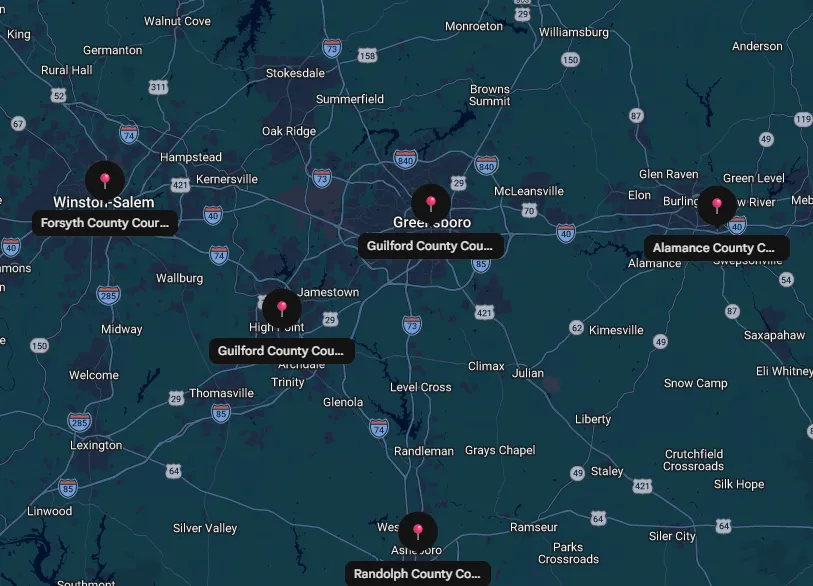
If you are arrested in the Triad area, your case will likely be heard at one of the following locations:
| Courthouse Name | Address | Star Rating | Link to Details |
| Guilford County Courthouse | 201 S Eugene St, Greensboro, NC 27401 | 2.5 | Link to Court Details |
| Guilford County Courthouse – High Point | 505 E Green Dr, High Point, NC 27260 | 2.5 | Link to Court Details |
| Forsyth County Courthouse | 175 N Chestnut St, Winston-Salem, NC 27101 | 3.3 | Link to Court Details |
| Alamance County Courthouse | 1 Court Square, Graham, NC 27253 | 3.3 | Link to Court Details |
| Randolph County Courthouse | 176 E Salisbury St, Asheboro, NC 27203 | 2.5 | Link to Court Details |
Knowing where your case will be heard can help you and your attorney prepare for court.
Frequently Asked Questions for a DWI Lawyer
Do I have to answer if the officer asks if I’ve been drinking?
You have the right to remain silent. You can politely tell the officer, “I don’t wish to answer questions.” Refusal to answer questions or submit to sobriety or breath tests is your legal right at DUI checkpoints in Greensboro, NC, but such refusal may have consequences depending on the situation, such as license suspension or being used as evidence in court. Being polite is the best way to handle it, but you don’t have to help them build a case against you.
Can I turn around if I see a checkpoint ahead?
Technically, it is not illegal to turn around if you do it legally (like turning into a driveway or making a legal U-turn). However, the police often have a “chase car” waiting for people who turn around. If you break a traffic law while turning, they will pull you over.
Do I have to take the breathalyzer on the side of the road?
In NC, the small hand-held breath test on the street is optional. You can say no to that one. However, the big machine at the station is different. If you say no to that one, you could lose your license for a year automatically.
In some cases, officers may also request a blood test to determine your blood alcohol concentration (BAC), especially if a breathalyzer is unavailable or if there are questions about the results.
What are my NC Fourth Amendment rights at a stop?
The Fourth Amendment protects you from “unreasonable searches and seizures.” At a checkpoint, this means the police can’t just dig through your car because they feel like it. They need a real reason or your permission.
What if the officer wasn’t wearing a uniform?
NC law usually requires officers at checkpoints to be in uniform and for the checkpoint to have blue lights visible. If it wasn’t clear they were police, your lawyer will want to know.
How long does a DWI stay on my record in NC?
A DWI conviction stays on your record forever in North Carolina. It cannot be “expunged” or erased. This is why it is so important to fight the charge from the very start.
Why do I need a lawyer if I failed the test?
Because the test might be wrong! The machines have to be cleaned and checked perfectly. Also, if the checkpoint itself was set up wrong, it doesn’t matter what the breath test said—the evidence might be thrown out.
Additional Tips
If you find yourself stopped at a DWI checkpoint, the best approach is to remain calm, be polite, and avoid confrontation with the officer. Remember, the officer is there to enforce the law and keep the roads safe—not to single you out. You have the right to refuse to answer questions beyond providing your identification and documents, and you can always request to speak with a lawyer if you’re arrested or charged with a DWI. Seeking legal assistance from a qualified DWI lawyer as soon as possible can make a big difference in your case, especially if you’re facing a DWI charge. A conviction can lead to license suspension, hefty fines, and higher insurance rates, so it’s crucial to understand the legal process and your options. By knowing your rights and being prepared, you can help protect yourself from the serious consequences of impaired driving charges.
If you are facing DUI charges or have been stopped at a DUI checkpoint in Greensboro, NC, don’t hesitate to contact our firm for experienced criminal defense. We offer a free consultation to discuss your case and legal options—reach out today to get the support you need.
Frequently Asked Questions for a DWI Lawyer
1. Do I have to answer if the officer asks if I’ve been drinking?
You have the right to remain silent. You can politely tell the lawyer‘s equivalent of “I don’t wish to answer questions.” Being polite is the best way to handle it, but you don’t have to help them build a case against you.
2. Can I turn around if I see a checkpoint ahead?
Technically, it is not illegal to turn around if you do it legally (like turning into a driveway or making a legal U-turn). However, the police often have a “chase car” waiting for people who turn around. If you break a traffic law while turning, they will pull you over.
3. Do I have to take the breathalyzer on the side of the road?
In NC, the small hand-held breath test on the street is optional. You can say no to that one. However, the big machine at the station is different. If you say no to that one, you could lose your license for a year automatically.
4. What are my NC Fourth Amendment rights at a stop?
The Fourth Amendment protects you from “unreasonable searches and seizures.” At a checkpoint, this means the police can’t just dig through your car because they feel like it. They need a real reason or your permission.
5. What if the officer wasn’t wearing a uniform?
NC law usually requires officers at checkpoints to be in uniform and for the checkpoint to have blue lights visible. If it wasn’t clear they were police, your lawyer will want to know.
6. How long does a DWI stay on my record in NC?
A DWI conviction stays on your record forever in North Carolina. It cannot be “expunged” or erased. This is why it is so important to fight the charge from the very start.
7. Why do I need a lawyer if I failed the test?
Because the test might be wrong! The machines have to be cleaned and checked perfectly. Also, if the checkpoint itself was set up wrong, it doesn’t matter what the breath test said—the evidence might be thrown out.