
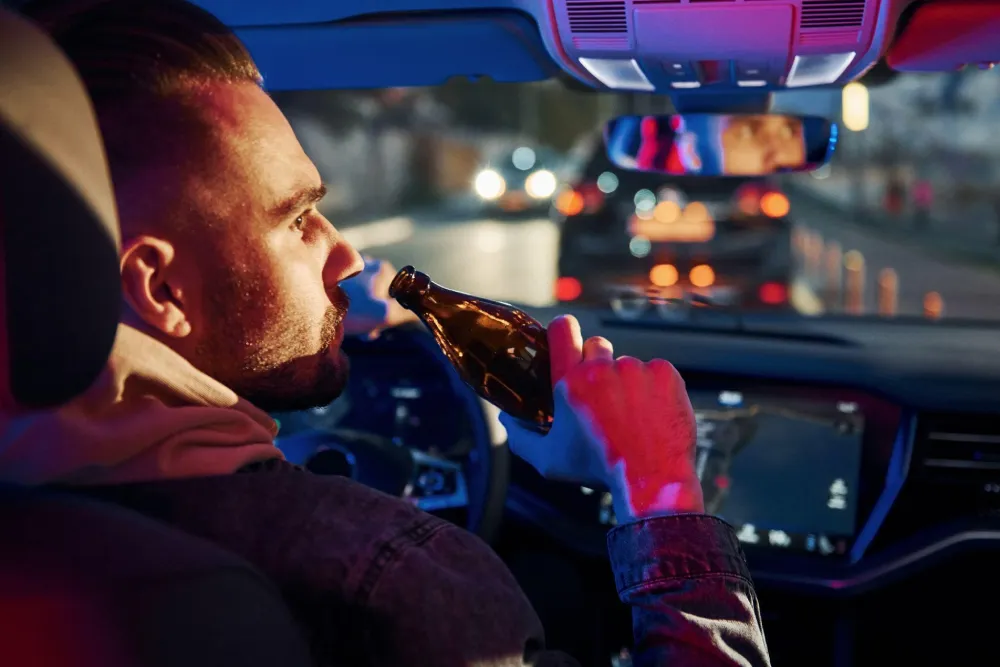
If you are searching for a Greensboro DWI lawyer or want to understand your options after a DWI arrest in Guilford County, this guide is for you. This guide explains the Greensboro DWI court process, key legal rights, local enforcement hotspots, and how to choose the right lawyer. It’s designed for anyone facing a DWI charge in Guilford County who wants to protect their future. The consequences of a DWI arrest are serious—potentially affecting your license, job, and reputation. Understanding your rights and the local legal process is essential to protecting your future and making informed decisions.
If you are reading this, you are probably having a really bad day. Maybe you were driving home from a game or a dinner in downtown Greensboro, and suddenly those blue lights were in your mirror. Now, you have a court date, your car might be gone, and you aren’t even allowed to drive to work. The fear and anxiety that come with a DWI arrest can be overwhelming—uncertainty about your future, worry about judgment from others, and distress over what happens next are all natural reactions.
Understanding the difference between DWI (Driving While Impaired) and DUI (Driving Under the Influence) is important for navigating your case. In North Carolina, DWI is the official legal term, but both refer to operating a vehicle while impaired by alcohol or drugs.
What Does a Greensboro DWI Lawyer Do?
DWI lawyers in Greensboro represent individuals facing charges for driving under the influence. They help clients understand their rights and options after being charged with DWI, providing personal attention and guidance throughout the case. A Greensboro DWI lawyer will review the facts, challenge evidence, negotiate with prosecutors, and advocate for you in court to achieve the best possible outcome.
Background: DWI Laws and BAC Limits in North Carolina
Before diving into the court process, it’s important to understand the basics of DWI law in Greensboro and Guilford County. The legal blood alcohol content (BAC) limit in North Carolina is 0.08% for most drivers. Commercial drivers have a lower BAC limit of 0.04%. For drivers under 21, any detectable amount of alcohol in their system is prohibited. These strict standards mean that even a small amount of alcohol can result in a DWI charge, making it crucial to know your rights and the legal process.
Key Takeaways: What You Need to Know Right Now
- The 30-Day Rule: In 2026, North Carolina still takes your license for 30 days the second you are charged with a DWI under N.C.G.S. § 20-16.5.
- Greensboro vs. High Point: Guilford County has two separate courthouses. You can check the official Greensboro location and the High Point location to ensure you are in the right place.
- 70% of Inmates: Almost 70% of people in our local jail are just waiting for their trial because they can’t pay their bond. We monitor Guilford County Detention Center updates daily to help move our clients’ cases forward.
- Checkpoint Rights: In January 2026, the NC Court of Appeals reaffirmed in State v. White that police must follow strict written policies for checkpoints. If they didn’t, we may have grounds to suppress the evidence.
- Fines are Up: Court costs and fines have increased slightly in 2026 to keep up with inflation, as detailed in the 2026 Report on Criminal Cost Waivers.
Now that you have a sense of the key facts, let’s walk through what happens after a DWI arrest in Greensboro.
What Happens After a DWI Arrest in Greensboro, NC?
A DWI arrest in Greensboro typically begins with a roadside test to determine if you are intoxicated. Whether you were stopped near the Friendly Center, on Wendover Avenue, or at a checkpoint near UNC Greensboro, the process usually leads to the same place: the magistrate’s office.
Initial Arrest Procedures
When you are arrested, the officer will take you to the Guilford County Detention Center. In Greensboro, this is located at 401 W. Sycamore St. (though the magistrate’s entrance is often around the corner on Edgeworth St.). The initial stage can be confusing and overwhelming, especially for those accused of being intoxicated.
License Revocation Timeline
The 30-Day Civil Revocation
This is the part that surprises everyone. You haven’t been convicted of anything yet, but your license is gone. Under North Carolina law (§ 20-16.5), if you blow a 0.08 or higher, or if you refuse the test, the magistrate takes your license for 30 days.
- The First 10 Days: You cannot drive at all. Period.
- After 10 Days: We can often help you get a “Pre-Trial Limited Driving Privilege.” This lets you drive to work and school while we wait for your court date.
Now that you know what to expect immediately after an arrest, let’s look at the potential penalties and charges you may face.
Understanding DWI Charges and Penalties in North Carolina
Facing DWI charges in North Carolina can feel overwhelming, but understanding what you’re up against is the first step toward protecting your future. A DWI conviction in Greensboro, NC, or anywhere in Guilford County, can lead to serious penalties—ranging from steep fines and the loss of your driver’s license to possible jail time.
Penalties Overview
The consequences don’t stop at the courthouse; a conviction can impact your employment, insurance rates, and even your ability to drive your motor vehicle for years to come. The law in North Carolina is strict, and DWI cases are complex, often involving technical evidence and strict legal deadlines.
That’s why it’s crucial to have a knowledgeable DWI attorney by your side. A law firm with experience in DWI defense, like Kreider Attorneys, can help you understand the specific charges you face and what penalties might apply in your situation. Whether you’re dealing with your first DWI or have prior convictions, the right attorneys can review your case, explain your legal options, and fight for the best possible outcome.
If you’re in Greensboro or anywhere in Guilford County, don’t wait to seek help. Contact a law firm that specializes in DWI cases to ensure your rights are protected and to give yourself the strongest chance at a favorable outcome.
Next, let’s explore where DWI arrests are most likely to happen in Greensboro.
DWI Hotspots: Intersections with the Highest Arrest Rates
Greensboro police and the Guilford County Sheriff’s office use data to decide where to patrol. They often focus on “High-Injury Networks” where accidents and impaired driving are most frequent. DWI enforcement in these hotspots targets drivers suspected of being under the influence of alcohol or drugs. If you are driving through these areas late at night, you are much more likely to encounter a DWI enforcement officer.
The Top Greensboro DWI Intersections
Based on recent traffic safety reports and arrest data for 2025 and 2026, these areas see the most activity:
- I-40 at Elm-Eugene Street & Randleman Road: This stretch of I-40 is a major hub for DWI enforcement. The narrowing lanes and heavy merge traffic make it a frequent site for accidents, which often lead to DWI investigations.
- West Wendover Avenue (Bridford to Tri-City): This commercial corridor is a “hot zone” for both speeding and DWI arrests. Because of the high volume of bars and restaurants nearby, patrols are very heavy on weekend nights.
- US 29 (O’Henry Blvd) at Phillips Ave & 16th Street: This area is part of Greensboro’s “High-Injury Network.” Police focus on this corridor because it has some of the highest crash rates in the city.
- Battleground Avenue near Cornwallis Drive: Known for its confusing lane shifts and randomly short one-way sections, this area is a common spot where impaired drivers make mistakes that lead to a stop.
- Lawndale Drive at West Cornwallis Drive: This is one of the top intersections in Greensboro for crash concerns, often involving failing to yield or impaired judgment.
Knowing where DWI enforcement is most active can help you understand the risks and why legal representation is so important. Next, let’s clarify which courthouse will handle your case.
Is My Case in the Greensboro or High Point Courthouse?
Guilford County is special because it has two different court systems. If you get this wrong, it can cause big problems.
- Greensboro Courthouse (201 S. Eugene St.): Most cases from Greensboro, Summerfield, and northern Guilford County end up here. Expect big crowds and a very busy docket, especially for criminal defense matters in Courtroom 1C, where many DWI and DUI cases are handled in criminal court.
- High Point Courthouse (505 E. Green Dr.): If you were pulled over in High Point or Jamestown, your case will likely be here. It’s a smaller building, but the prosecutors have more time to look closely at every detail of your traffic ticket or DWI file.
At Huggins Law Firm, we represent the accused in both. We serve clients across multiple counties in North Carolina. We know the judges and the prosecutors in Graham, Burlington, Asheboro, and Winston-Salem too. We don’t just “show up”—we fight with a strategy that fits the specific courtroom we are in.
Understanding where your case will be heard is just one part of the process. Next, let’s discuss your rights at DWI checkpoints and how they can affect your case.
Checkpoint Laws and Your Rights in 2026
In 2026, police are using checkpoints more than ever. But here is something very few people are talking about: Police must have a written plan. According to recent 2026 North Carolina court updates, if the police set up a “Checking Station” without a supervisor’s written permission or if they didn’t stop cars in a “neutral” pattern (like every single car), the whole stop might be illegal. If the stop was illegal, everything they found—even if you were over the limit—can be thrown out of court. We look at the police logs to see if they followed the rules.
Additionally, officers are required to inform suspects of their rights during a DWI stop, including their Miranda rights, to ensure proper legal procedure and protect suspects’ rights.
Checkpoint procedures can have a major impact on your defense. Let’s look at how aggravating factors and breath test results can influence your case.
Aggravating Factors and Breath Test Results: What They Mean for Your Case
Not all DWI cases are treated the same in North Carolina. Certain aggravating factors—like excessive speeding, causing property damage, or having a child in the car—can make the penalties for a DWI conviction much more severe. If your case involves any of these circumstances, the risk of higher fines, longer probation, or even jail time increases significantly.
Breath test results are another critical piece of evidence in DWI cases. If your breath test shows a high blood alcohol content, or if there are questions about how the test was administered, these details can dramatically affect the outcome in court. In the Greensboro area, as well as in Winston Salem and High Point, DWI cases with aggravating factors or disputed breath test results are often heard in superior court, where the stakes are even higher.
A skilled DWI attorney can help you examine every detail—challenging the accuracy of the breath test, questioning whether the equipment was properly maintained, and determining if your rights were respected during the arrest. By understanding how aggravating factors and breath test results influence your case, you and your attorney can build a defense strategy aimed at achieving the best possible outcome in court.
Now, let’s discuss how to choose the right Greensboro DWI lawyer to guide you through this process.
How to Choose a Greensboro DWI Lawyer
Hiring a DWI attorney is crucial to navigate the legal process after a DWI arrest. When searching for a Greensboro DWI lawyer, prioritize attorneys with significant experience in North Carolina impaired driving laws. Look for a lawyer familiar with Guilford County court procedures and local prosecutors, as DWI attorneys in Greensboro are familiar with local court procedures and how prosecutors handle DWI cases. The right attorney will understand the nuances of the local system and can provide the best defense for your situation.
Choosing the right lawyer is a key step in building your defense. Next, let’s review common defense strategies used in North Carolina DWI cases.
Defense Strategies in North Carolina DWI Cases
Every DWI case in North Carolina is unique, and a strong defense requires a tailored approach. An experienced DWI attorney will start by thoroughly reviewing the circumstances of your arrest—looking for any mistakes made by law enforcement, issues with the breath test, or violations of your rights. Challenging the evidence is often key to protecting your ability to drive and minimizing the penalties you face.
In Guilford County, DMV hearings are a critical part of the process. These hearings can determine whether you keep your driver’s license while your case is pending, and they often require quick action. A law firm that focuses on DWI cases will guide you through these hearings, help you prepare the necessary documentation, and represent you before the DMV and in court.
Support from a dedicated legal team can make all the difference. By working with a firm that understands North Carolina DWI law, you can explore every available defense—whether that means negotiating for reduced charges, seeking alternative sentencing, or taking your case to trial. The right strategy can help you protect your rights, your license, and your future.
With your defense strategy in mind, let’s look at the local resources you may need during this process.
Local Resources You Need to Know
Having the right addresses and phone numbers is the first step in regaining control of your situation. Whether you are dealing with a criminal case or a complex family matter, knowing where to go is vital.
- Guilford County Courthouse (Greensboro): 201 S Eugene St, Greensboro, NC 27401. (Phone: 336-412-7300). This is the primary hub for our DWI defense hearings and civil trials.
- Guilford County Courthouse (High Point): 505 E Green Dr, High Point, NC 27260. (Phone: 336-822-6700). Cases originating in the High Point area are handled here.
- Guilford County Detention Center (Greensboro): 201 S Edgeworth St, Greensboro, NC 27401. (Phone: 336-641-2700). If a loved one is currently in custody, we can often discuss family law or emergency visitation issues that may arise.
- Guilford County Detention Center (High Point): 507 E Green Dr, High Point, NC 27260. (Phone: 336-641-7900). We also represent clients here for a variety of matters, including estate planning needs that must be addressed urgently.
If you are facing a DWI or other criminal charge, schedule a consultation to review your case and discuss your legal options.
Next, let’s see why Huggins Law Firm is the right choice for your defense.
Why Huggins Law Firm is the Champion You Need
Founded by Attorney Micah E. Huggins, our firm was built on a simple conviction: every client deserves clarity and compassion. We’ve been in business for over ten years, and we’ve won awards because we treat our neighbors like family.
Whether it’s a Criminal Case, Family Law Matter, or a Personal Injury claim, we bring the same precision and purpose. We work to restore what’s been lost—your dignity, your stability, and your peace of mind.
If you have questions about your case, the next section covers the most common concerns people have after a DWI arrest in Greensboro.
10 Common Questions for Lawyers in the Greensboro & Triad Area
License and Driving Privileges
1. Can I get a DWI reduced to “Reckless Driving” in NC?
It is very hard in North Carolina because of the “no-plea-bargaining” policy for DWIs. However, if the evidence is weak, we can fight for a dismissal or find other legal paths.
2. What happens if I refused the breathalyzer?
The DMV will likely suspend your license for one full year, regardless of what happens in court. This is a separate civil penalty under the “Implied Consent” law.
3. Can I drive to work if my license is revoked?
After 10 days of the civil revocation, we can often help you get a “Limited Driving Privilege” if you meet the requirements (like having insurance and an assessment).
4. How do I get my license back after the 30 days are up?
To get your license back after the 30-day revocation:
- Go to the courthouse.
- Pay a $100 fee to the clerk.
- Confirm your license status before driving again. Your license doesn’t just “automatically” become valid!
Court Process and Penalties
5. Do I have to go to jail for a first-time DWI?
In 2026, most Level 5 or Level 4 sentences (common for first-timers) involve probation and fines rather than jail, as long as there were no “grossly aggravating” factors.
6. How much are the fines in 2026?
For a first offense, fines can be up to $200, but court costs and fees usually add another $200 to $400 on top of that.
7. What is an Ignition Interlock Device?
If your BAC was 0.15 or higher, you may be required to have a “blow-and-go” device installed in your car to drive.
8. Can I get an expungement for a DWI?
Currently, North Carolina law does not allow for the expungement of a DWI conviction. This is why fighting the charge from the start is so important.
9. How long does the whole case take?
In Guilford County, about 60% of cases take less than a year, but more serious cases can take 24 months or more.
Assessments, Community Service, and Other Requirements
10. What is a “Substance Abuse Assessment”?
Everyone charged with a DWI in NC must get a professional assessment. Doing this early shows the judge you are taking things seriously.
11. Is community service required for a DWI in North Carolina? Can it help my case?
Yes, community service is often required as part of DWI sentencing in North Carolina, especially for first-time offenders. Completing community service can sometimes be used as a mitigating factor, showing the court you are taking responsibility and may help reduce other penalties or be part of a diversion program.
Don’t let one night change the rest of your life. If you need a champion who knows the Greensboro streets and the Guilford County courts, let’s talk. Contact Huggins Law Firm today: See our reviews and schedule a visit.
Helpful Links: